
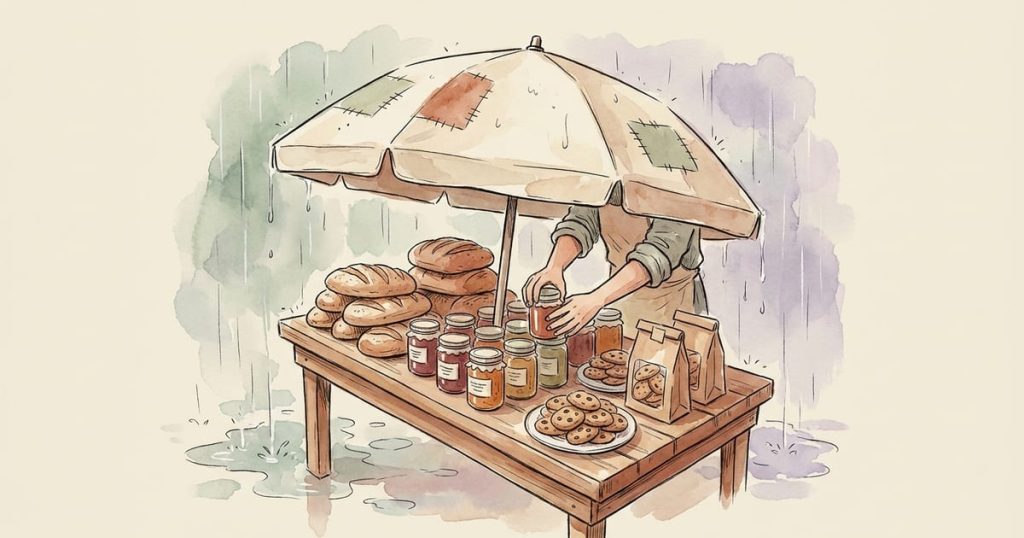
Cottage food law usually does not require insurance to sell homemade food directly from your home. But your homeowners policy will not cover a business claim, and most farmers markets require proof of liability coverage before you can set up. For a small maker, a general product liability policy runs about $250 to $500 a year. Not legally required for most, but often required the moment you sell anywhere but your own porch.
This is general information, not insurance, legal, or financial advice. Coverage, requirements, and prices vary by state, insurer, and your specific products. Get quotes and read the policy before you buy.
Does cottage food law require insurance?
For most sellers, no. Cottage food laws are written to let you make approved foods in your home kitchen and sell them directly to customers without a commercial license. Insurance is almost never part of that legal requirement, whether you make jam, granola, candy, dried herb blends, spice mixes, honey, or baked goods.
The catch is that "not required by law" is not the same as "safe to skip." Two things fill that gap fast: the places you sell often require coverage, and your homeowners policy specifically will not step in if something goes wrong. More on both below.
Whether your product even qualifies as cottage food, and which foods are approved, is a separate question worth settling first if you are not sure your product is covered.
Why your homeowners insurance will not cover it
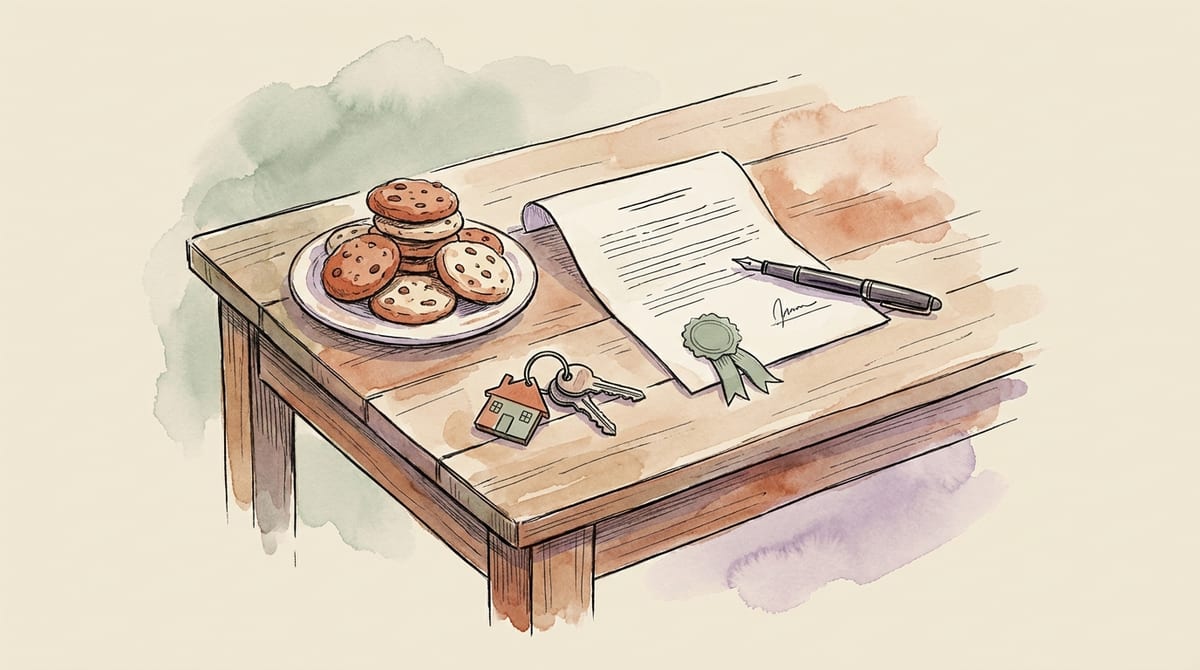
This is the part that catches people. Standard homeowners and renters policies exclude business activity. The moment you are making food to sell rather than to feed your household, an insurer can deny a claim because the loss came from a commercial activity.
So if a customer says your jam made them sick, or someone trips on your steps picking up an order, your home policy gives you nothing. The legal fees and any settlement come out of your pocket. A single claim can run into tens of thousands of dollars, which is the kind of hit that ends a small side venture before it starts.
Some homeowners policies sell a home-based business rider that adds a little property coverage and limited liability. The SBA describes these as adding "coverage riders to homeowner's policies for small equipment and third-party liability" (SBA). They are better than nothing, but they are usually thin, and many exclude food production outright. Read what the rider actually covers before you rely on it.
What coverages matter for a home food seller
You do not need every kind of insurance. For most makers, two coverages do almost all the work, and a couple more come into play as you grow.
The two that matter most:
- General liability. Covers third-party bodily injury and property damage. The classic case is a customer who slips at your pickup spot, or whose property you damage on a delivery. The SBA calls this protection against loss from "bodily injury, property damage, medical expenses" and similar claims, and notes it "applies to any business" (SBA).
- Product liability. This is the big one for food. It covers claims that your product made someone sick or caused an allergic reaction. The SBA lists product liability for anyone who manufactures or sells a product, covering losses "from defective products" that cause injury. For a food seller, the real risk shows up hours or days after the sale, not at your table, so this is the coverage you most want to confirm is included.
As your operation grows, look at these:
- Commercial property. Protects your equipment, ingredients, and finished inventory from fire, theft, and similar losses. Useful once you have real money tied up in a chest freezer, a dehydrator, or a big ingredient run.
- Business owner's policy (BOP). A bundle that combines general liability and commercial property in one policy, usually cheaper than buying them separately. The SBA flags the BOP as "particularly beneficial for small business owners" who want simpler buying and cost savings.
- Commercial auto. If you drive to markets or deliver orders, your personal auto policy may not cover a business accident.
- Workers' compensation. Required in most states the moment you have employees, even part-time help.
For the plain-language overview of what each type covers, the SBA's business insurance guide is a solid, neutral starting point.
The type and amount of insurance you decide on should depend on your risk tolerance. I always get at least 3 comparable quotes when I'm shopping insurance. This helps me understand policy features, limits, and exclusions. If one vendor calls out an exclusion that matters to me, I'll be sure to ask the other two. Ultimately I feel this helps ensure that I have the information I need to pick the best policy for my business.
When do markets and buyers require insurance?
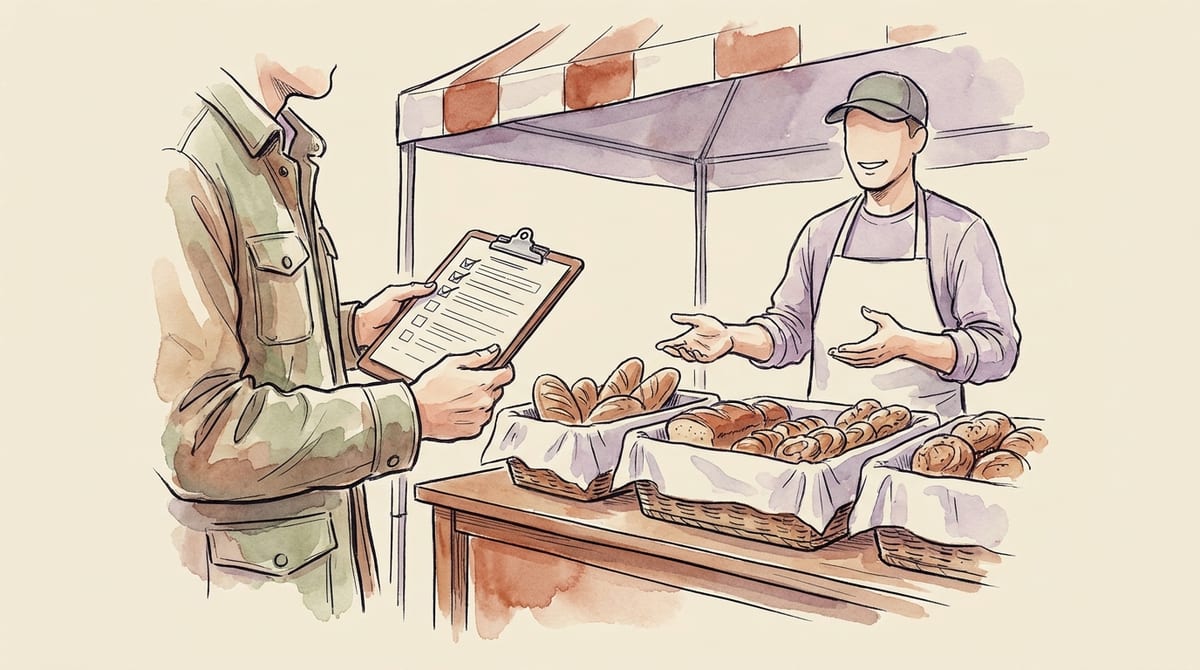
This is where most makers actually hit an insurance requirement, not from the state, but from whoever gives you a place to sell.
| Where you sell | Insurance typically required? |
|---|---|
| Direct from home (pickup, neighbors) | Rarely required |
| Custom orders and local delivery | Rarely required |
| Farmers markets and craft fairs | Often required, commonly $1 million in liability |
| Pop-ups, festivals, and events | Frequently required by the venue |
| Wholesale to a shop or cafe | Almost always required |
The farmers-market line is the one that surprises people. Most markets ask for a certificate of insurance (COI) showing active coverage, often at least $1 million per occurrence, before they hand you a booth. Many also want to be named as an additional insured, which means your policy extends to protect the market itself if a claim traces back to your booth. Good food-specific policies let you add additional insureds for free.
If a market is on your plan, get the exact insurance and COI requirements in writing early from the market manager, since permit and coverage rules vary from one market to the next.
Start Traders Till for free.
Cost your products, print compliant labels, and track every sale. Free forever plan, no card required.
How much does cottage food insurance cost?
For a home food seller with no employees and no storefront, general plus product liability typically runs $250 to $500 a year, or roughly $21 to $40 a month. Most policies come with $1 million per-occurrence and $2 million aggregate limits, which is what markets usually want to see. Fliprogram, for example, offers cottage food liability coverage starting at just under $26 a month.
What moves your price:
- Your state
- Your annual revenue
- The coverage limits you choose
- What you make (allergen-heavy or higher-risk foods can cost more)
- Whether you add equipment or property coverage
Food-specific liability programs built for cottage food businesses are usually the cheapest and fastest route: you can often get a policy and a printable certificate in minutes, priced for low-revenue operations. General small-business insurers are worth a look if you want to bundle a BOP or grow into broader coverage. These are categories to compare, not specific endorsements.
(Cost figures are practitioner guidance and market-typical ranges, not a cited source. Confirm live quotes at publish time.)
Insurance and an LLC do different jobs
A common mix-up: people form an LLC and assume they are covered. They are not, at least not the way they think.
- An LLC creates a legal boundary between your business and your personal assets. It can keep a business lawsuit from reaching your house or savings. It does not pay the claim.
- Insurance pays the claim. It covers the medical bill, the legal defense, the settlement.
They protect you in different ways, and plenty of sellers eventually want both: insurance to cover the loss, and an LLC as a second layer of separation. Which one you need first depends on your risk and your revenue.
How to shop for a policy
The SBA's four-step approach works well for a small food business: assess your specific risks, find a licensed agent or program, compare multiple quotes, and reassess every year as your business changes (SBA).
When you compare quotes, check for these specifics:
- Product liability is included, not just general liability
- The limits meet what your markets require (often $1 million per occurrence)
- You can add additional insureds (markets, venues) at no extra cost
- Your equipment and inventory are covered if that matters to you
- The policy covers claims that surface after the sale, not just at the point of sale
Bottom line
Cottage food law usually will not require insurance, but your homeowners policy will not cover a business claim, and the first market you sell at probably will ask for proof. For most home food sellers, a general plus product liability policy in the $250 to $500 a year range is the right starting point, added once you are selling regularly or about to do your first market.
Bakers have a few extra wrinkles to price in: equipment coverage, spoilage, and higher-volume kitchens. For everyone else, insurance is just one line on a longer startup list.
Getting ready to sell? Traders Till tracks your sales, expenses, and market days so the money side stays simple from day one. Start free →
Sources
Every source below was checked against the issuing agency's own page on July 10, 2026.
Summarize & Save This Guide On
Add Traders Till As A Preferred Source on Google Prompt copiedApril Lee has a B.S. in Agriculture from Cal Poly Pomona, is a certified food handler (ANAB-accredited, Learn2Serve), and holds ANAB-accredited food allergy training. She writes about selling homemade and homegrown products - cottage food rules, pricing, and the business side of farm stands - and is the co-founder of Traders Till, an app that helps home producers track what they make, sell, and earn.
Start Traders Till for free.
Cost your products, print compliant labels, and track every sale. Free forever plan, no card required.
 Save to Pinterest