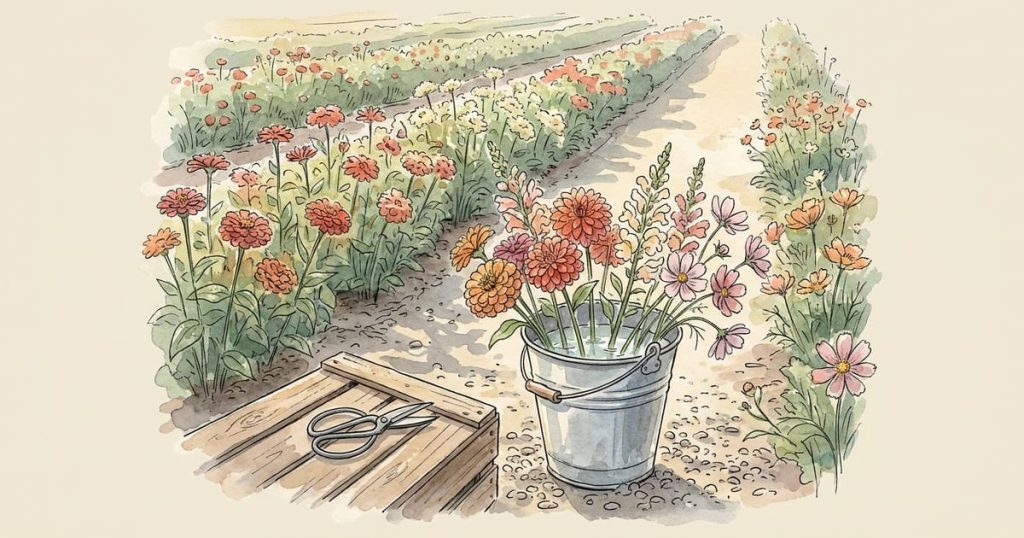
To start a cut flower business, plant a short list of easy, high-yield flowers in succession so something is always blooming, register your business and collect sales tax where your state requires it (flowers are not food, so cottage food rules do not apply), and buy the basics: seeds, buckets, sharp snips, and a cool place to hold stems. Price by the stem and the bouquet, then sell first at farmers markets, a farm stand, and to local florists. Most growers reach a first sale in their first season.
What makes cut flowers a good first business?
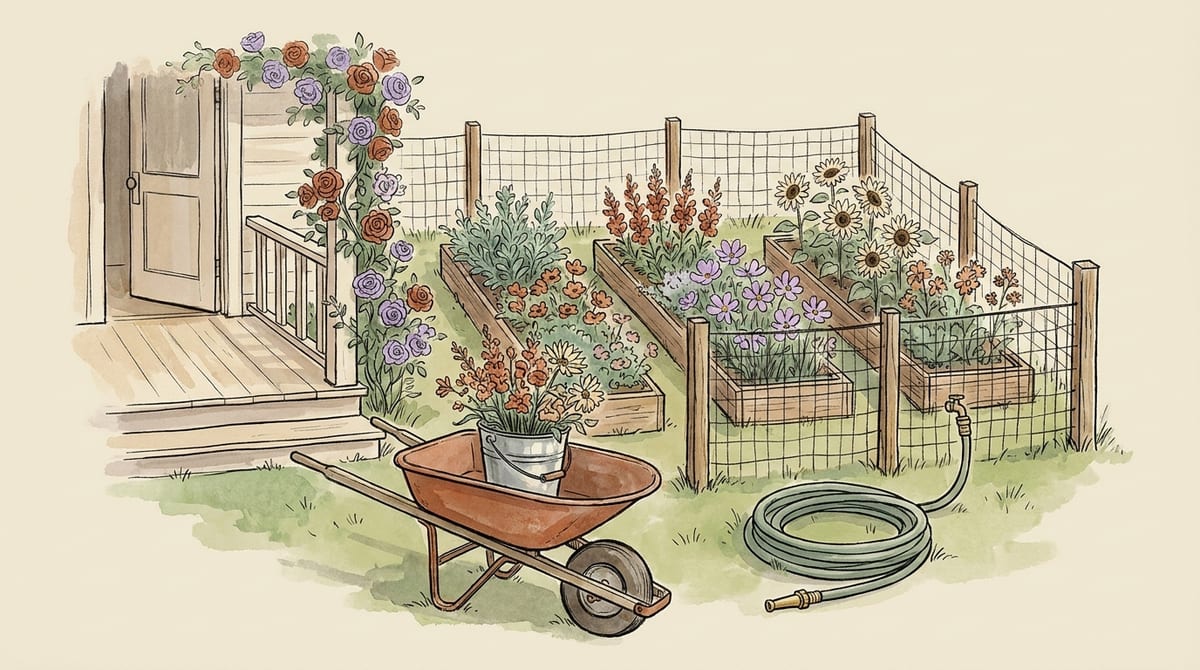
Cut flowers are one of the friendliest ways to turn a backyard into income. The startup cost is low, the first crop comes in weeks rather than years, and the product sells itself on looks alone. A single well-run bed can throw off hundreds of stems a season, and flowers carry the kind of margin small food products only dream about, because your main input is seed, water, and your own hands.
The legal path is lighter than almost any food business too. No health inspection of your kitchen, no cottage food registration, no allergen labeling. That does not mean zero rules (more on that below), but you can go from seed packet to first bouquet without the compliance homework a home baker faces.
This guide is the flower-specific version of our universal walkthrough. The parts that are the same for any small venture, business structure, getting an EIN, a business bank account, the first-90-days rhythm, work the same way here, so we will not spend the words on them twice.
Here we spend the words on what is genuinely different about growing and selling flowers: what to plant, what it costs, what a bouquet is worth, and who buys first.
What flowers should you grow to sell?
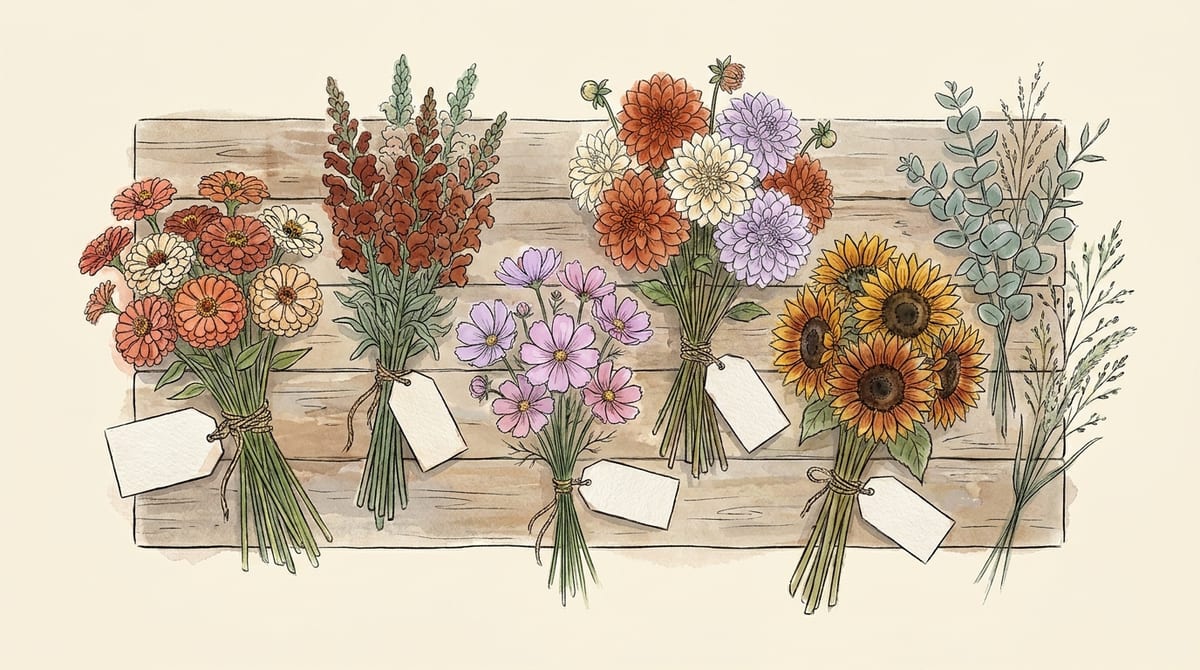
Beginners lose more money to the wrong plant list than to anything else. You want flowers that are cheap from seed, quick to bloom, productive over a long window, and sturdy enough to survive a bucket and a market table. A reliable starter lineup:
- Zinnias (cut-and-come-again all season, nearly foolproof)
- Sunflowers (branching pollen-free types for market bunches)
- Cosmos (airy, fast, endless)
- Snapdragons (early, cool-tolerant, florist favorite)
- Celosia (heat-proof, holds color, dries well)
- Feverfew (clouds of small white daisies, a florist-favorite filler that keeps producing all season)
- Sweet peas (fragrance sells them, cool-season crop)
- Dahlias (higher effort from tubers, but premium stems once you are ready)
Two ideas do more for your cash flow than any single variety:
Succession planting. Do not sow everything at once. Start a new batch of your fast crops (zinnias, cosmos, sunflowers) every two to three weeks from your last frost until midsummer. That keeps a steady wave of fresh stems coming instead of one glut followed by bare beds.
Grow filler and foliage, not just faces. A bouquet is mostly greenery and airy "filler." Lemon and cinnamon basil, mint, grasses, and dill stretch a handful of showy blooms into a dozen sellable bouquets and are what separates a full-looking bunch from a thin one. Fragrant basils do double duty here: they smell incredible in a bouquet and they keep producing all summer with regular cutting.
Start narrow. Five or six varieties grown well beat twenty grown badly, and you can always add next season once you know what your customers reach for.
Do you need a license to sell cut flowers?
For most small growers selling their own flowers, the legal path is short. Cut flowers are an agricultural product, not food, so the cottage food laws, kitchen inspections, and food labeling that govern home food businesses simply do not apply to you. What does apply is ordinary small-business setup:
- Register your business. In most cases you can start as a sole proprietor under your own name, or file a DBA or LLC if you want a business name and a liability wall. This step is identical for any venture: choose your structure, register the name if you want one, and apply for an EIN directly with the IRS, which is free and takes minutes.
- Sales tax. Cut flowers are usually a taxable retail product, unlike many grocery foods. If your state has a sales tax, you will likely need a seller's permit and will collect tax on market and farm-stand sales. Register with your state's revenue or tax department before your first sale.
- Local rules. A farm stand on your property, on-site parking, or signage can trip a zoning or home-occupation rule in some towns. A quick call to your city or county clears it up.
One caveat to check, kept general on purpose: a few states treat anyone selling plants, plugs, or tubers as a licensed nursery or plant dealer. Selling cut stems rarely triggers this, but if you plan to sell live plants or rooted dahlias on the side, ask your state department of agriculture first. When in doubt, confirm with your own state and local agencies rather than a forum.
What does it cost to start a cut flower business?
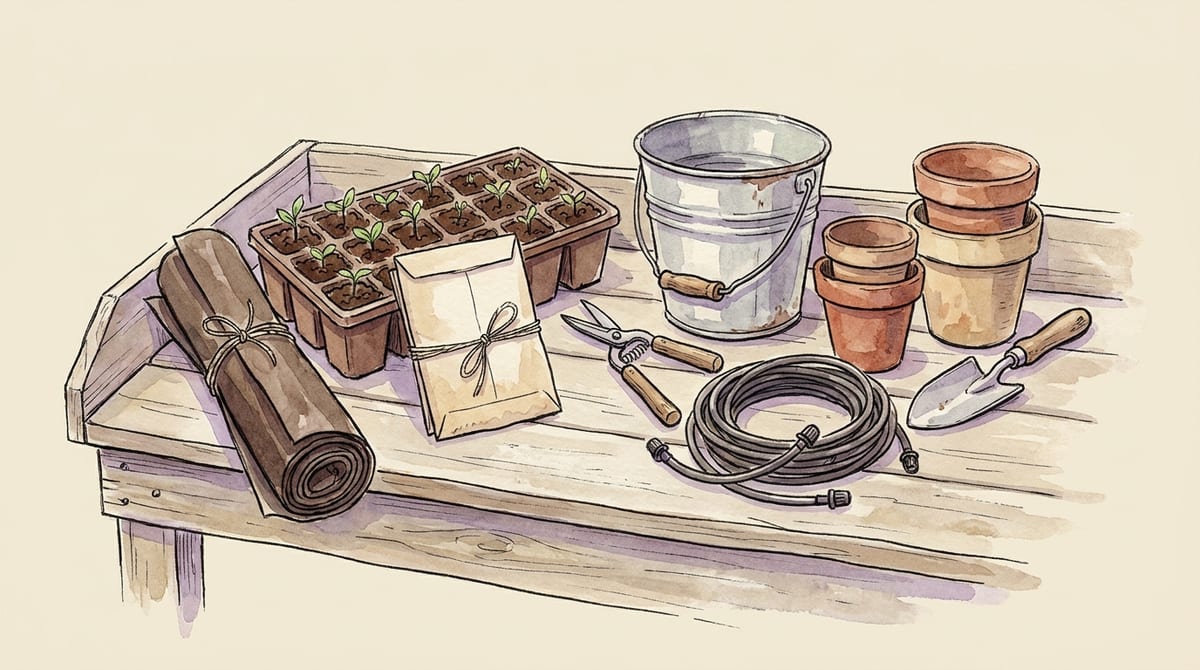
Less than almost any other product business, because your growing space already exists. A realistic first-year budget for a backyard-scale grower:
- Seeds, bulbs, and tubers. A full season of varieties runs roughly $100 to $300. Dahlia tubers and specialty seed cost more per plant but earn it back in premium stems.
- Bed prep. Compost, a broadfork or a rented tiller, and landscape fabric or mulch. Before you spend a dime on fertilizer, get your soil tested: most county Extension offices will test it for a small fee (sometimes free) and tell you exactly which amendments to add for the flowers you want to grow, instead of guessing and buying what you may not need. Search "[your county] extension soil test" to find yours. A few beds can be under $200 if you already garden.
- Harvest and post-harvest gear. Sharp floral snips, several dozen clean buckets, and flower food or a simple bleach-water dip to keep stems fresh. Buckets are your most-used tool, so buy more than you think.
- Cold storage. The single upgrade that most improves your flowers and your margin. Even a spare fridge or a shaded, insulated space to hold cut stems overnight doubles vase life and lets you harvest ahead of a market. A dedicated cooler comes later.
- Selling supplies. Kraft sleeves, rubber bands or twine, a table, and a canopy for markets.
Most backyard growers get going for a few hundred to about a thousand dollars, with cold storage the biggest optional line. Because your inputs are so cheap, flowers land high on the list of the most profitable products a small maker can start with.
You do not need the tractor, the greenhouse, the irrigation system, or every gadget you see online. A single well-tended bed as small as 4 by 10 feet, with good compost, seeds, sun, and water, will grow more flowers than you expect in a first season.
Social media is full of established farms, so do not let someone's year-fifteen setup convince you your year one is not enough. Start small, learn your handful of crops, and add beds as the sales come in.
Start Traders Till for free.
Cost your products, print compliant labels, and track every sale. Free forever plan, no card required.
How do you price cut flowers?
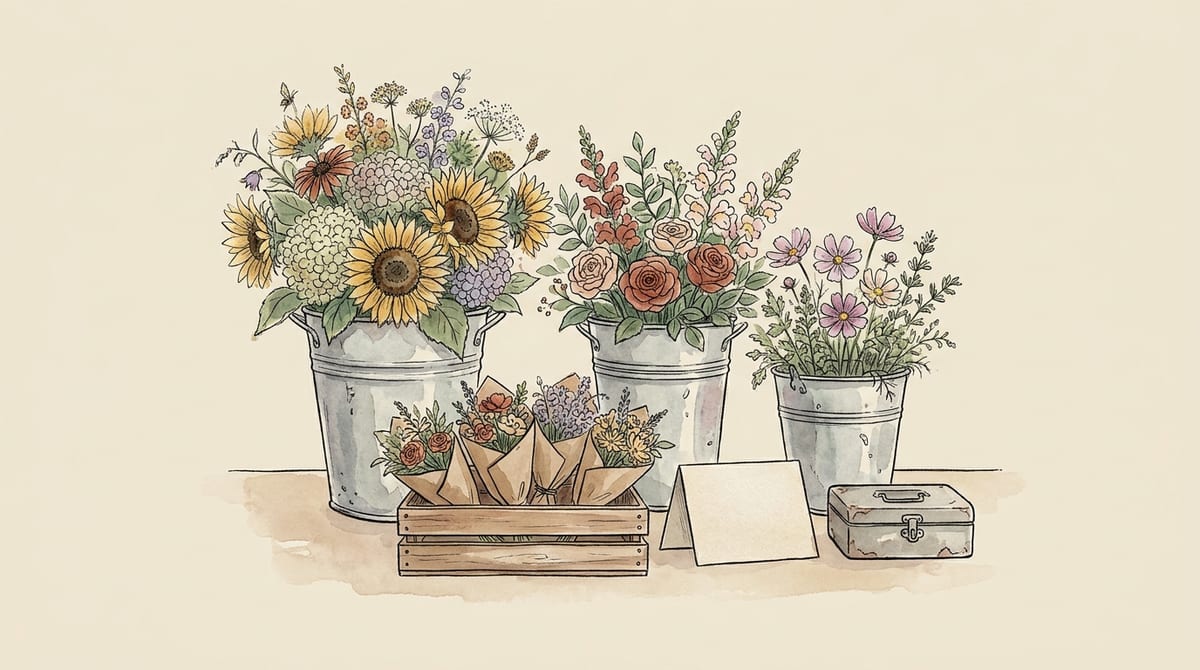
Flowers are priced three ways at once, and knowing all three lets you sell to every kind of buyer:
- By the stem. Your base unit. Common stems might run a range like $1 to $3 each; specialty and focal blooms (dahlias, ranunculus, premium sunflowers) command more. Stem pricing is what you quote florists.
- By the bouquet. A wrapped market bouquet is your retail hero, usually built from 8 to 15 stems and a mix of focal, filler, and foliage. Price it as a bundle, not stem-by-stem, and it will clear your best margin of the day.
- By subscription. A flower CSA or a bouquet subscription is recurring, prepaid income that smooths out your season. A member pays up front for a bouquet a week across your peak months.
The method for setting any of these prices is the same one we teach for food: add up your true cost per unit (seed, amortized supplies, and your labor), then mark up for margin instead of guessing.
It is the same method you would use to price any homemade product; the math is identical, just swap ingredients for seed and stems for jars. Whatever you do, do not price to be the cheapest bucket at the market. Fresh, local, just-cut is the premium story, so charge like it.
To make that concrete, here is what a single small bed can look like on paper. These are typical modeled figures, not our own harvest numbers, so treat them as a starting point and expect your real bed to differ by variety, region, and where you sell:
| A modeled 4 by 10 ft zinnia bed, one season | Estimate |
|---|---|
| Zinnia seed (2 packets) | $8 |
| Compost and amendments | $25 |
| Water for the season | $15 |
| Snips, buckets, sleeves, bands (amortized) | $30 |
| Total cash cost | ~$78 |
| Stems produced (cut-and-come-again, ~40 sq ft) | ~700 |
| Sold as ~70 market bouquets at $15 each | ~$1,050 |
| Gross margin before your labor | ~93% |
| Your time (succession sowing, ~2 harvests a week for 12 weeks, bunching) | ~40 hrs |
| Return per hour after cash costs | ~$24/hr |
The lesson in that table is the one every beginner misses: the seed-to-stem margin is enormous, so the thing that actually decides your profit is your own time. That is exactly the number a batch tracker like Traders Till is built to surface, cost per bed and hours per bouquet, so "flowers are profitable" becomes a real number instead of a slogan.
Where do you sell cut flowers first?
The channels that fit flowers, roughly in the order most growers add them:
- Farmers markets. The natural first home. Shoppers already expect fresh and local, bouquets are an impulse buy, and you get instant feedback on which colors and price points move.
- A farm stand or porch pickup. Lowest overhead of all. A bucket of bunches and an honor box on a good road can sell out a small harvest with zero booth fee.
- Local florists and studios. Steady wholesale demand for local, seasonal stems florists cannot get from importers. You sell by the stem or the bucket, on a standing weekly order. Consistency matters more than variety here.
- A flower CSA. Prepaid bouquet subscriptions, sold by the season. This is your most reliable cash flow and it front-loads money before your costs hit. See how the model works in our CSA selling guide, then price the season as a bundle rather than a stack of single bouquets.
- Weddings and events. The highest ticket, and the most demanding. One wedding can equal a month of market days, but the deadlines are immovable and the expectations are high, so grow into it once your production is dependable. The ordering and deposit playbook is the same as any wedding or event order: quote clearly, take a deposit, and put the details in writing.
Start with one or two channels, get them working, then layer on the next. Trying to serve markets, florists, and weddings in your first season is how good growers burn out.
What early mistakes trip up new flower farmers?
The pattern is predictable, so you can skip it:
- Growing too many varieties. A scattered patch gives you five stems of everything and a full bouquet of nothing. Grow fewer things in bigger blocks.
- Skipping succession. One big bloom, then empty beds and empty market Saturdays. Sow in waves.
- No cold storage or post-harvest care. Stems cut warm and left in the sun wilt by noon. Harvest early, into water, into shade or a cooler. This one habit saves more flowers than any variety choice.
- Forgetting filler and foliage. All faces, no greenery, means thin bouquets and wasted focal blooms.
- Underpricing. New growers routinely charge half what their flowers are worth. Price for the premium, local, just-cut product you actually have.
- Overcommitting to weddings too soon. Saying yes to a big event before your production is steady is the fastest way to a stressful, unprofitable summer.
Bottom line
A cut flower business is one of the lowest-cost, fastest-to-first-sale ventures you can start from your own yard. Plant a short list of easy flowers in succession, keep the legal side simple (register, collect sales tax, check local rules), invest early in buckets and a cool place to hold stems, price by the stem and the bouquet, and sell first where shoppers already want fresh and local. The shared startup steps are the same ones any small venture begins with, so you are not reinventing the wheel.
One thing to set up before your first market: your books. The moment you are buying seed, tracking stems, and ringing up bouquets, the numbers pile up fast. Traders Till is the batch-and-sales tracker we are building for exactly this kind of small grower: log what a bed cost, price your bouquets from real numbers, and watch your margins and tax-time totals build themselves. Start free with Traders Till → — the doors are open.
Summarize & Save This Guide On
Add Traders Till As A Preferred Source on Google Prompt copiedApril Lee has a B.S. in Agriculture from Cal Poly Pomona, is a certified food handler (ANAB-accredited, Learn2Serve), and holds ANAB-accredited food allergy training. She writes about selling homemade and homegrown products - cottage food rules, pricing, and the business side of farm stands - and is the co-founder of Traders Till, an app that helps home producers track what they make, sell, and earn.
Start Traders Till for free.
Cost your products, print compliant labels, and track every sale. Free forever plan, no card required.
 Save to Pinterest