

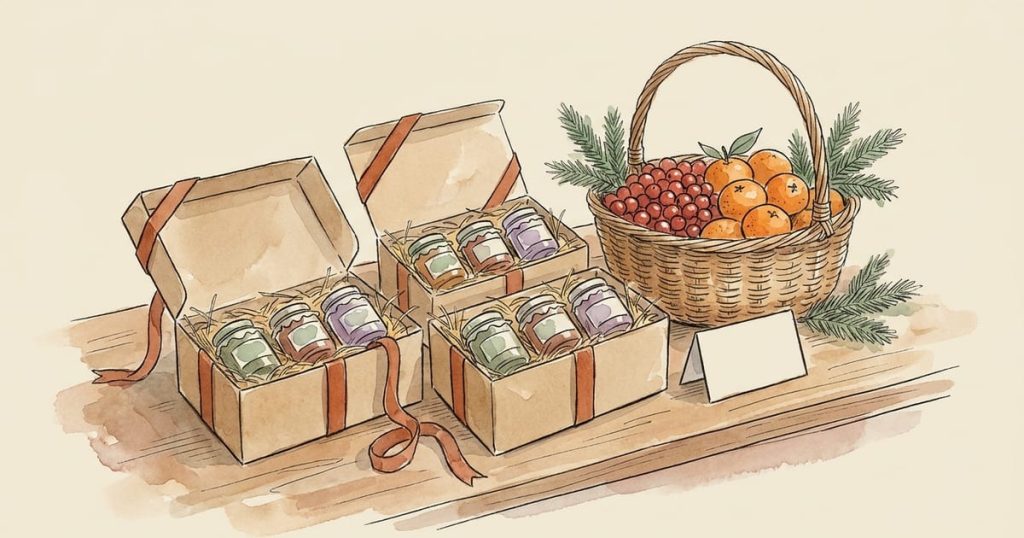
Seasonal promotions work when they drive volume, clear perishable stock, or reward loyal buyers, and they backfire when they train customers to wait for a markdown. The best seasonal moves are not discounts at all: gift bundles, early-bird preorders, limited seasonal flavors at a premium, and loyalty rewards. Save real markdowns for end-of-day perishables. At peak demand, hold or raise your price. Then check the numbers to see what actually worked.
Note: The numbers here are worked examples that carry over from our main pricing guide, not a price list. Your real promo prices come from your own cost floor. The point is to show you the math so your seasonal deals sell more without quietly selling at a loss.
What is the difference between a promotion and a discount?
A promotion is anything you do to sell more during a window. A discount is only one kind, and it is the most expensive one. The trap makers fall into is treating "run a promotion" and "cut the price" as the same move. They are not.
A cut to your price comes straight out of your thinnest layer, which is profit. On a normal handmade margin, a 20 percent discount roughly halves what you earn per unit, so you have to sell twice as many just to stand still. Worse, a regular seasonal sale teaches your buyers that your real price is the sale price and full price is a number for suckers. We work through that math in full in our guide to why discounting usually costs makers more than they think.
So the goal of a good seasonal promotion is to move more product or reward the right people without touching your everyday price. Almost every promotion below does exactly that.
Which seasonal promotions actually work?
These are the ones that raise sales without eroding your base price. Each one either raises the average order, rewards a proven regular, or clears stock that would otherwise be waste.
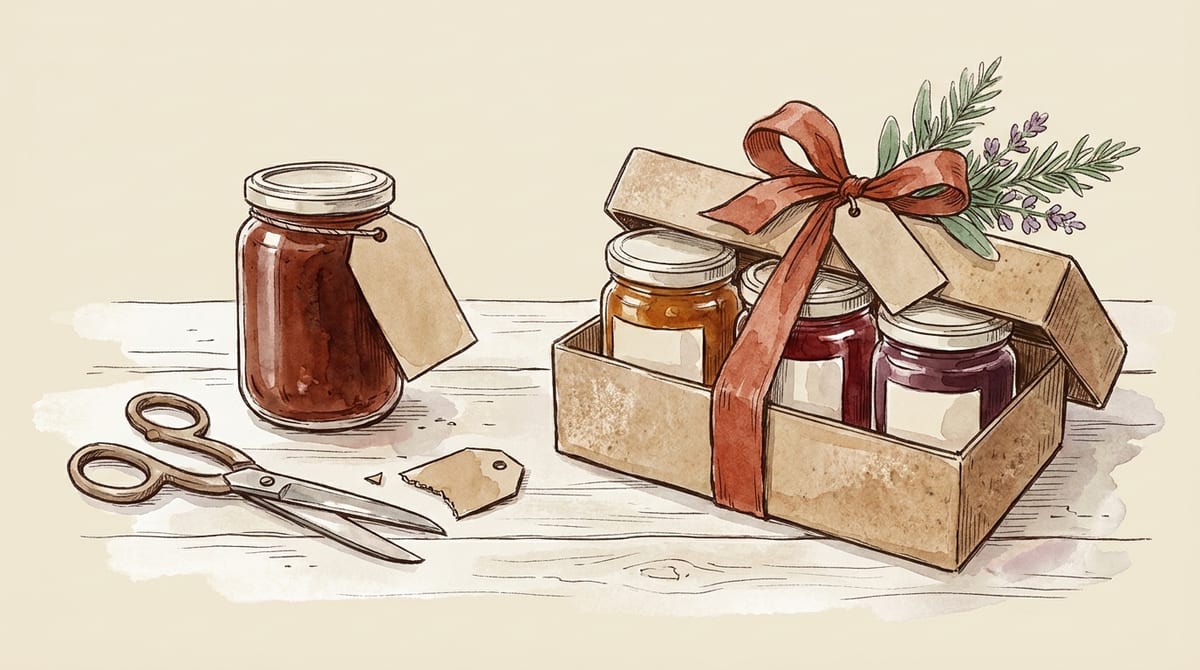
- Holiday gift bundles. A curated set in themed packaging, sold at a markup, not a markdown. Three 4 oz jars that sell for $6 loose ($18) go in a kraft box with a ribbon and a tag for $28. The buyer is paying for a finished present, and the box is the product. The full method is in our guide to bundles and multi-buys.
- Early-bird preorder incentives. "Order your Thanksgiving pies by Nov 15" with a small perk locks in demand before you buy ingredients, so you make to real orders instead of guessing. That is a volume and cash-flow win, not a price cut.
- "Buy 2 gift boxes" volume deals. A multi-buy on gift sets ("2 boxes for $52") raises the basket for the gifting shopper who is already buying for several people. The discount comes out of profit and never through your cost floor.
- Limited-time seasonal flavors at a premium. A pumpkin-spice or cranberry run offered only in October and November is special because it is scarce, which justifies a higher price, not a sale. We cover running limited-edition food drops in its own guide.
- Loyalty punch cards. "Every tenth jar free" spends the reward only on proven regulars and never touches your shelf price for everyone else. A holiday double-stamp week rewards the behavior you want. More in our guide to building customer loyalty for a food business.
- End-of-market-day markdowns on perishables. Bread, cut fruit, anything that will not survive to next weekend. Half price on something that would otherwise be waste is pure recovery, not a discount on sellable stock. We cover end-of-day market pricing tactics, and the waste side of tracking yield and waste, in their own guides.
The thread running through all six: each is bounded, deliberate, and still profitable. None is a standing markdown on your everyday price.
Why do holidays justify higher prices, not sales?
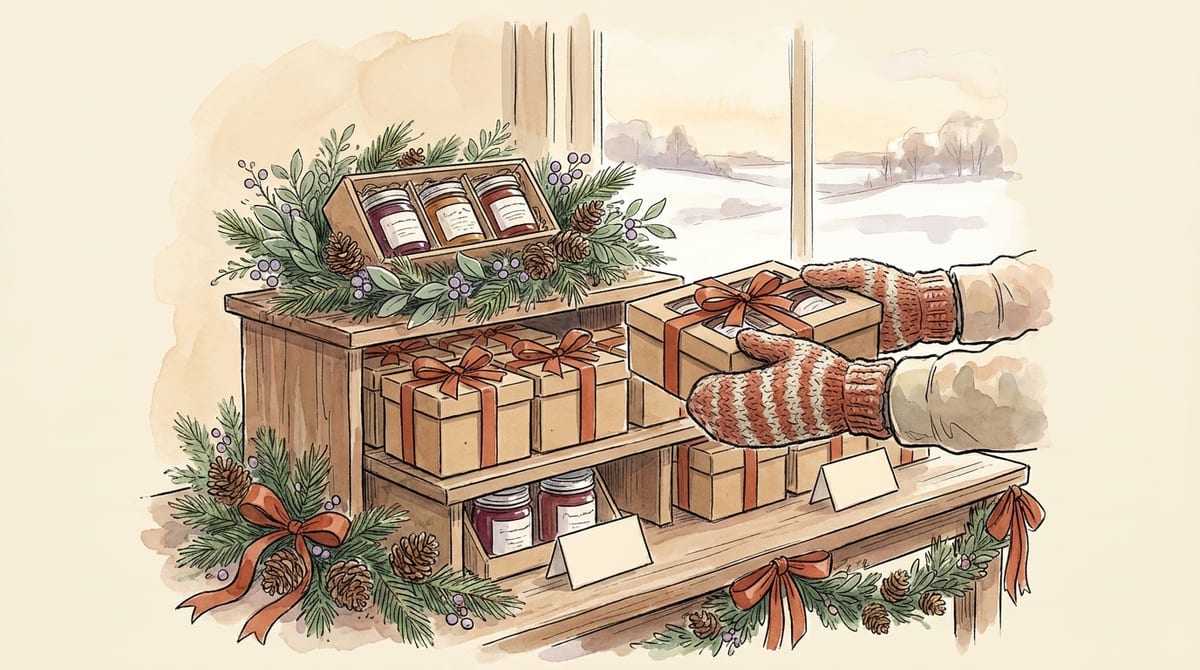
This is the instinct to fight. When demand is highest is exactly when makers feel pressure to discount, and it is precisely the wrong time. At the holidays your customers are motivated, time-pressed, and buying gifts. They are the least price-sensitive they will be all year.
A gift buyer is not comparing your per-ounce price to the supermarket. They want something that looks the part and is ready to give. That is when a premium bundle, a limited flavor, or gift-ready packaging earns its keep. Discounting into that demand just leaves money on the table.
So the holiday playbook is: hold your everyday price, and add higher-priced options above it (bundles, gift sets, limited runs) rather than cheaper ones below it. For the full logic of pricing to what your product is worth, see the pricing pillar, how to price homemade food.
How do I protect my margin while running promotions?
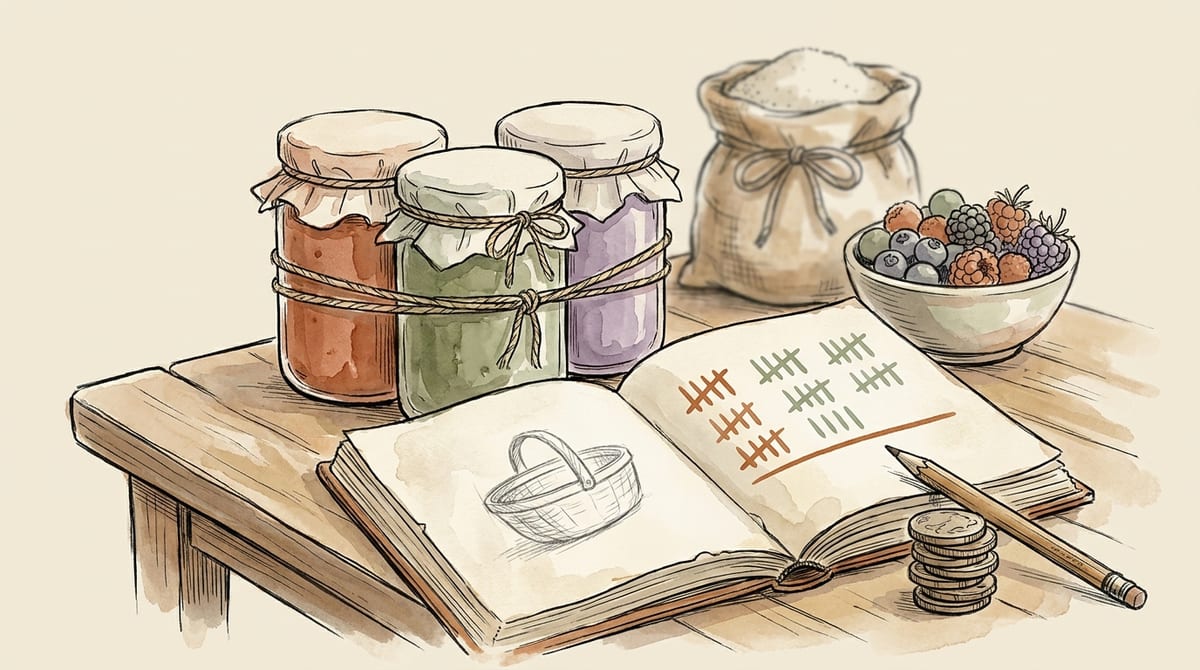
Three rules keep a clever seasonal deal from becoming an expensive one.
Discount off a healthy margin, never a thin one. A promotion is only safe if there was real profit to give up in the first place. If your everyday price barely clears cost, you have nothing to promote with. Fix the base price first.
Raise the average order instead of cutting the price. A bundle grows what each customer spends, which is the cheapest lever you have at a market where foot traffic is fixed. Take the running jam numbers from our pricing guide: a jar costs $5.88 to make and sells for $10, a $4.12 profit at a 41 percent margin. Sell three for $27 and each jar still earns $3.12 (a 35 percent margin), but you moved three jars and made $9.36 instead of $4.12. The $3 came out of profit. Your floor never moved.
Know your floor, and know it this week. That $5.88 is not fixed. It moves every time fruit, butter, or jar prices do, and seasonal ingredients swing most at exactly the season you are promoting. Before you set a holiday bundle price, recompute your real per-unit cost. Our guide to calculating your cost of goods (COGS) walks the build.
The one line to tattoo on your kettle: bundle price divided by units must stay above your cost floor. Discount into your profit, never through the floor.
Start Traders Till for free.
Cost your products, print compliant labels, and track every sale. Free forever plan, no card required.
Should I clear off-season stock or hold it?
It depends on one thing: whether the product survives to sell later. A jar of jam keeps, so a leftover holiday flavor is not a clearance problem, it is inventory you can sell in January, rebrand, or fold into a sampler. Do not slash a shelf-stable product just because the season turned.
Perishables are the opposite. Anything that will not keep is worth clearing at end of day rather than throwing away, because half price on waste is still recovery. Themed or dated packaging (a jar with a "Merry Christmas" label) is a real reason to clear too, since it genuinely loses value on December 26. Everything else, hold it.
When should I run each promotion?
Promote around the calendar, not on impulse. A rough year for a food maker:
- Valentine's, Mother's Day, Father's Day: gift bundles and premium sets.
- Summer market season: multi-buys and loyalty pushes while traffic is high.
- Back-to-school and fall: limited seasonal flavors at a premium.
- November and December: your biggest window, so early-bird preorders in early November, gift boxes through December, and a genuine once-a-year sale only if you want one.
- January: a quiet month, so this is where a real clearance or a "new year" loyalty reset fits.
The rule underneath the calendar: keep true sales rare. A once-a-year event is fine precisely because it is rare, and rare is what stops it from training buyers to wait. For what to make each season, see our seasonal product ideas for food sellers, and to plan the promotion around it, our guide to marketing a home food business.
How do I know which promotions worked?
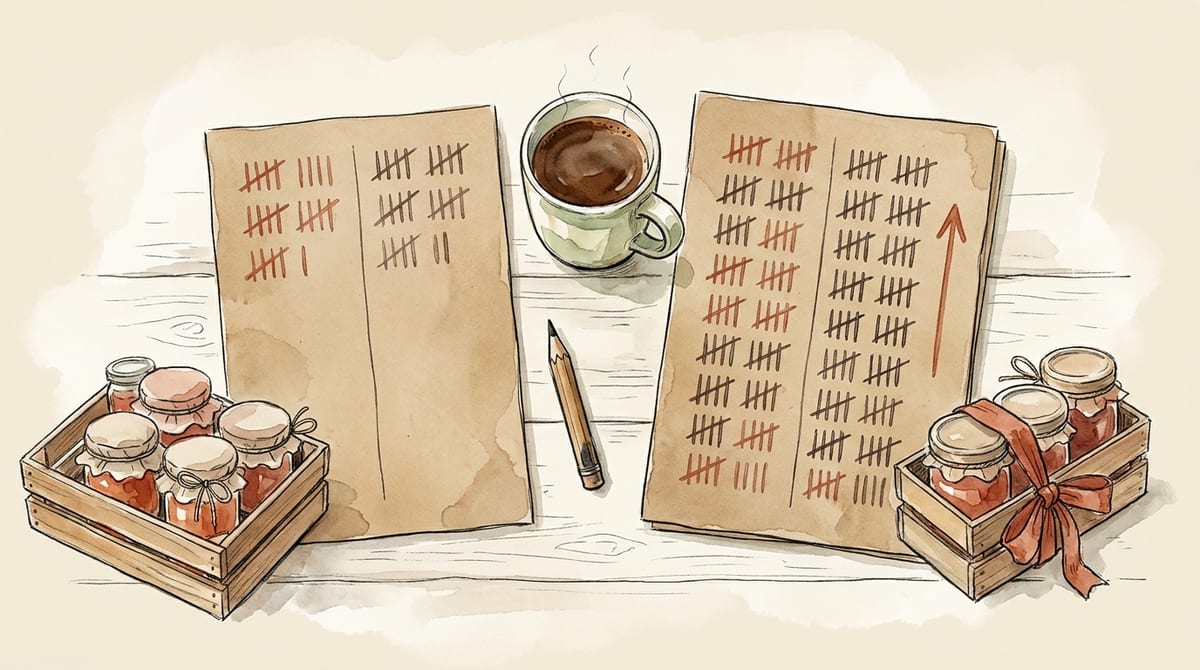
Most makers run a holiday sale, feel busy, and never actually check whether they made more money or just more noise. Busy is not the same as profitable. A promotion that doubled your unit sales but halved your margin can leave you exactly where you started, only more tired.
The way to know is to compare the promo period against a normal one on the numbers that matter: total sales, units moved, and profit after the promo cost, not just revenue. If your "buy 2 boxes" week moved 30 percent more product at the same margin, run it again. If a 20 percent flavor sale moved the same units you would have sold anyway, you just gave away profit.
This is the reason we built Traders Till. When you log each batch and market day, you can pull the promo week up next to a normal week and see the real difference in units, margin, and sell-through per product, so next season you repeat what paid and drop what did not.
Bottom line
Seasonal timing is a gift for a food maker, but only if you use it to sell more, not to sell cheaper. Reward loyalty, bundle for gifting, take preorders, and offer limited flavors at a premium. Save real markdowns for end-of-day perishables and dated packaging. At peak demand, hold or raise your price rather than cut it, discount off a healthy margin only, and always keep every deal above your cost floor. Then check the promo week against a normal one, keep what paid, and drop what did not.
No external sources were cited on this page. It is strategic and margin-focused, and the worked figures (the $5.88 jar floor, $10 single price, 3-for-$27 bundle, $28 gift box) carry over from the pricing pillar rather than from an outside claim. Swap in April's real Traders Till numbers before publish.
Summarize & Save This Guide On
Add Traders Till As A Preferred Source on Google Prompt copiedApril Lee has a B.S. in Agriculture from Cal Poly Pomona, is a certified food handler (ANAB-accredited, Learn2Serve), and holds ANAB-accredited food allergy training. She writes about selling homemade and homegrown products - cottage food rules, pricing, and the business side of farm stands - and is the co-founder of Traders Till, an app that helps home producers track what they make, sell, and earn.
Start Traders Till for free.
Cost your products, print compliant labels, and track every sale. Free forever plan, no card required.
 Save to Pinterest