
The IRS does not care whether you call it a hobby or a business. It looks at how you actually run the activity: are you trying to make money, keeping records, and behaving like a business? If yes, it is a business, and you report it on Schedule C where you can deduct your expenses. If it is truly a hobby, you still owe tax on the income, but you generally cannot deduct the expenses. That gap is exactly why the label matters.
This is general information, not tax or legal advice. How the IRS treats your activity depends on your specific facts, and the rules change. For your own situation, check the current IRS guidance or talk to a tax professional.
Why does hobby versus business even matter?
Because the two are taxed very differently, and not in the hobby's favor.
If your food selling is a business, you report it on Schedule C. You pay tax on your profit, which means your ingredient costs, packaging, market fees, and mileage come off the top before tax. A business can even deduct a loss against other income in a slow year. (For how that form works, see Schedule C for home producers and home food business deductions.)
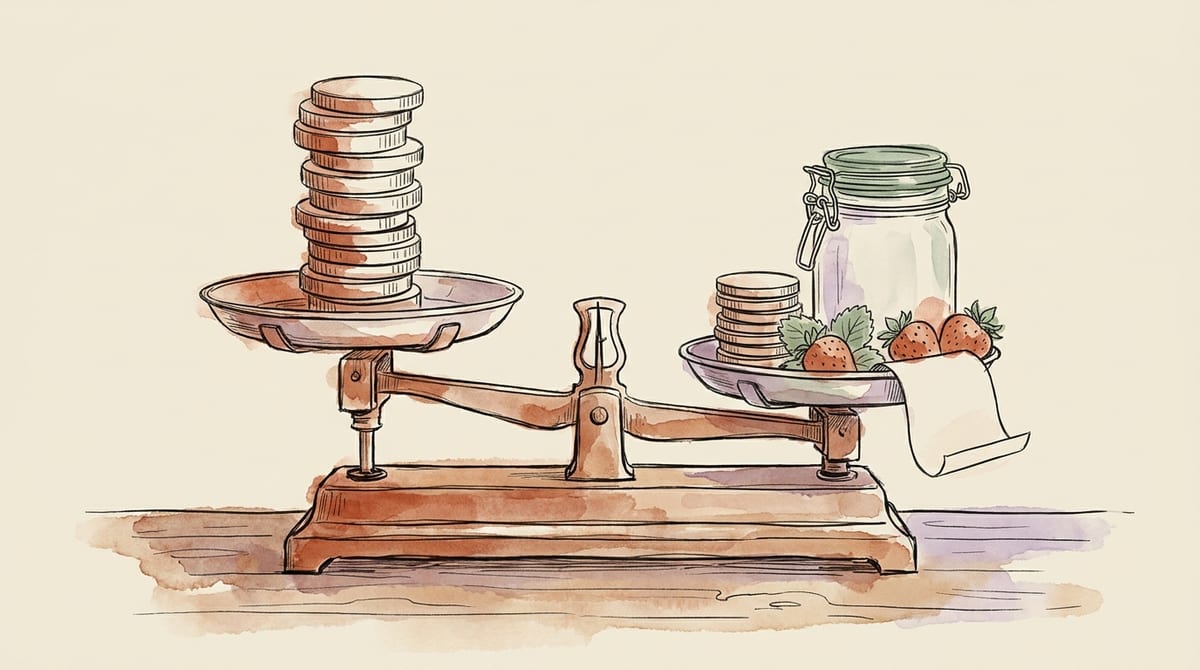
If the IRS treats it as a hobby, the math flips. You still have to report the income. The IRS is direct about this: "Taxpayers who make money from a hobby must report that income on their tax return" (IRS). But your expenses are a different story. Under current law, hobby expenses are miscellaneous itemized deductions, and as the IRS puts it, they "can no longer be deducted" (IRS).
Read that again, because it is the whole point. As a hobby, you are taxed on your gross sales with no write-offs for what it cost you to make the product. Sell $3,000 of jam and spend $1,800 on jars, fruit, and booth fees, and a business pays tax on $1,200 while a hobby pays tax on the full $3,000. "Just a hobby" is often the more expensive answer, not the safer one.
(Note on the rules: the suspension of miscellaneous itemized deductions came from the 2017 Tax Cuts and Jobs Act. Confirm the current-year treatment before you rely on it, since parts of that law are scheduled to change.)
One of the things to remember is that the IRS doesn't give you a limit by which you have to earn a certain amount of profit in order to have it be a business. If you're only making $3,000 a year, but you're making three out of five years' profit, that can still be a business if you're actually trying to make it profitable. That's the key thing: are you trying to earn a profit? Are you running it like a business? Are you adapting? Nobody can guarantee that you won't be audited, but if you're here reading this article, you're probably running a business.
How does the IRS decide if it's a business?
There is no single test and no dollar line you cross. The IRS looks at the whole picture to judge whether you have a genuine profit motive. It even says so plainly: "no single thing is the deciding factor" (IRS).
Here are the factors the IRS weighs (IRS Tax Tip):
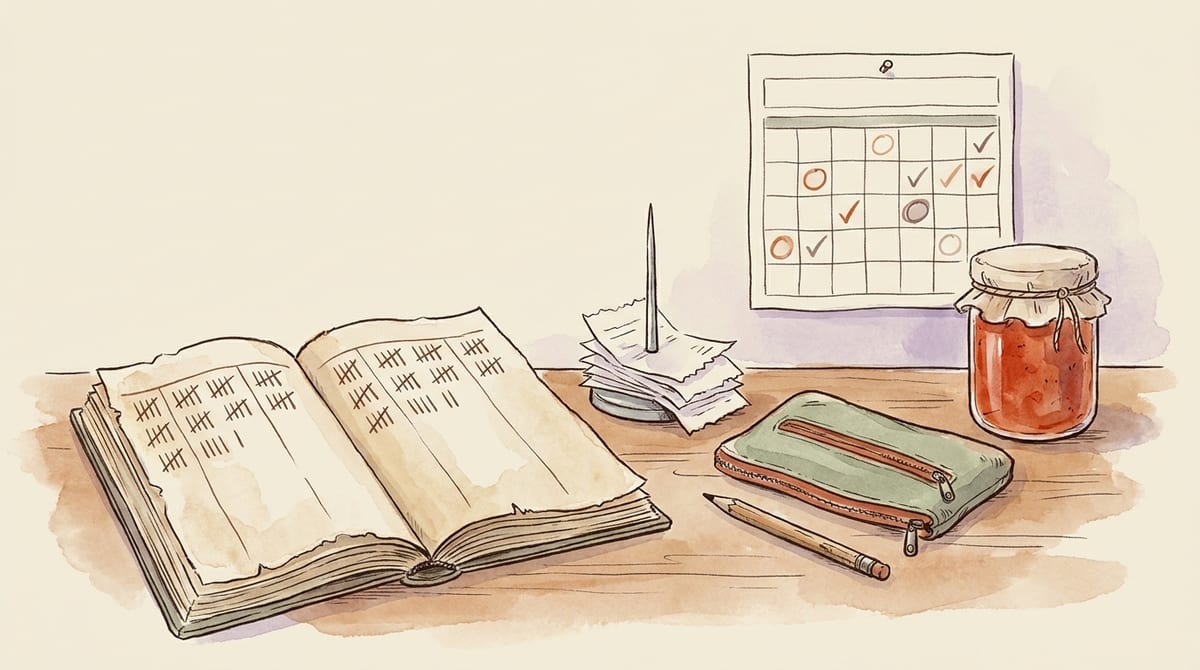
- Whether you run the activity in a businesslike manner and keep complete, accurate books and records.
- Whether the time and effort you put in shows you intend to make it profitable.
- Whether you depend on the income for your livelihood.
- Whether losses are beyond your control or normal for a startup phase.
- Whether you change your methods to improve profitability.
- Whether you and your advisors have the knowledge to run it successfully.
- Whether you were profitable doing similar activities before.
- Whether the activity makes a profit in some years, and how much.
- Whether you can expect a future profit from the appreciation of assets you use.
The IRS also lists a personal-enjoyment factor: whether you carry out the activity mainly for pleasure or relaxation. That one trips people up. Enjoying your work does not make it a hobby. Plenty of profitable bakers love baking. The IRS is clear that "all factors, facts, and circumstances with respect to the activity must be considered. No one factor is more important than another" (IRS).
Notice how many of those factors come down to behavior, not intent. Keeping records, having a separate account, tracking whether you actually made money, and adjusting when you do not. Those are things you control. Doing them is how you demonstrate you are running a business.
What is the "3 of 5 years" rule?
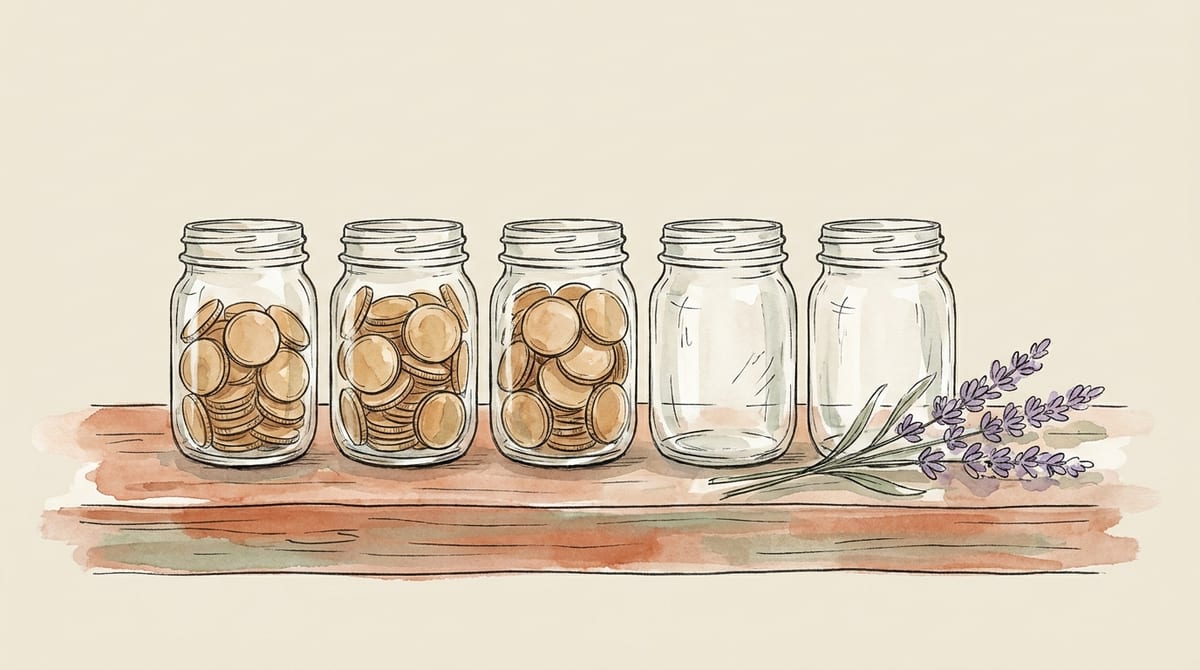
This is the one piece of the hobby-loss world that comes with an actual number, so it gets a lot of attention.
The tax law includes a presumption in your favor: if your activity turns a profit in a certain number of years, the IRS presumes you are in it for profit, and the burden shifts to them to prove otherwise. The IRS confirms this presumption exists on its page for Form 5213, which lets you "postpone an IRS determination as to whether the presumption applies that an activity is engaged in for profit."
The commonly cited threshold, set in the tax code, is a profit in at least 3 of the last 5 consecutive tax years (including the current year). Certain horse-related activities use a 2-of-7 window. Both numbers are printed in the general information on Form 5213 itself. Clear that bar and you are generally presumed to be a business.
Two things to keep straight:
- Missing the 3-of-5 mark does not automatically make you a hobby. It just means you do not get the automatic presumption, so the decision falls back to the factors above. New businesses often lose money in early years and are still clearly businesses.
- The presumption is a floor, not a ceiling. You do not need to hit it to be a legitimate business if the factors show a real profit motive.
(The 3-of-5 threshold comes from the tax code's hobby-loss rule. Treat the specific numbers as guidance to confirm with a tax professional or current IRS instructions for your year.)
Start Traders Till for free.
Cost your products, print compliant labels, and track every sale. Free forever plan, no card required.
Does a little Etsy or market income make me a business?
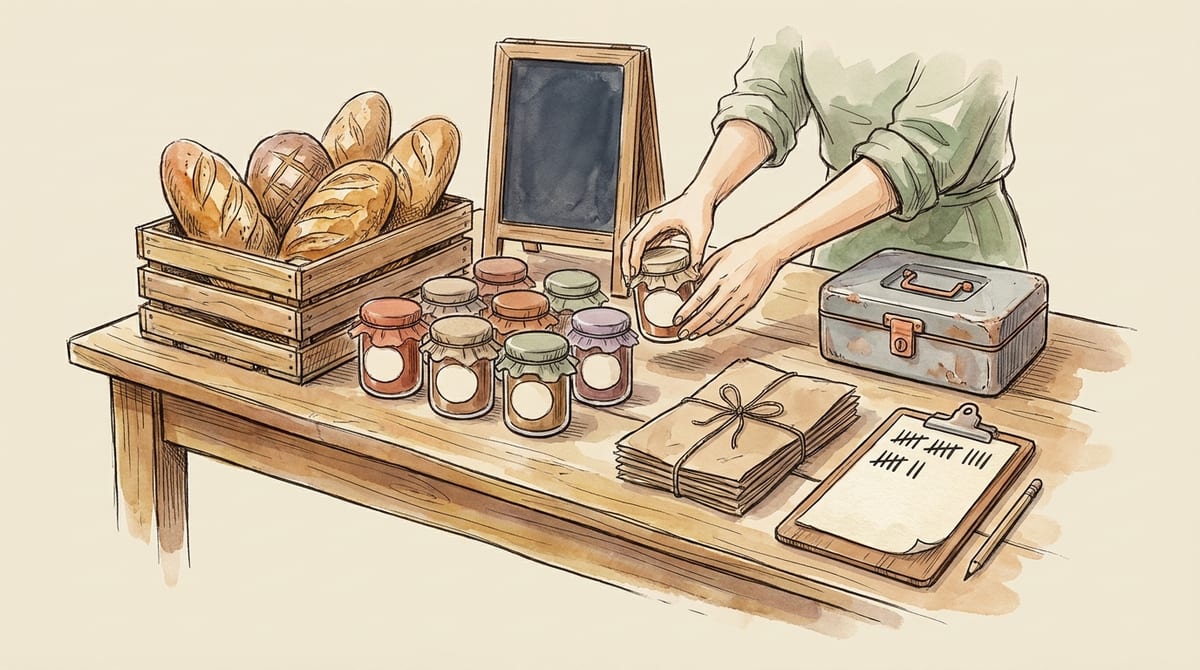
Not by itself. Selling a few loaves at one market or listing some jam on Etsy does not flip a switch. What matters is the pattern: are you selling regularly, to make money, and running it like an operation?
A useful way to think about it:
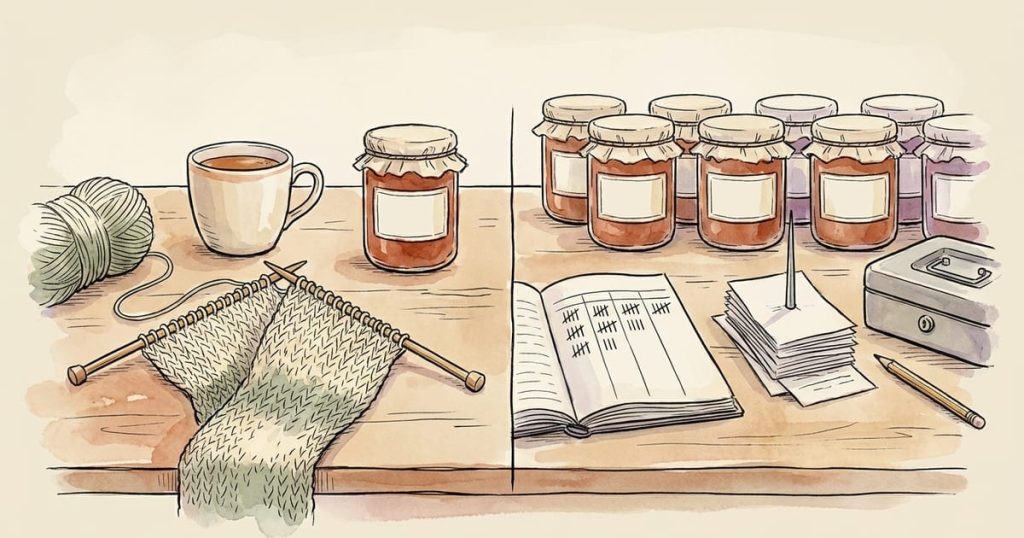
- A true hobby that happens to earn a little: you knit for fun, sell the occasional scarf, keep no books, and are not trying to grow it.
- A business: you post a market schedule, restock to meet demand, track sales and costs, price for profit, and would be disappointed to lose money.
Most people reading a guide like this are already in the second group. If you are showing up to markets, reordering supplies, and hoping to make rent money from it, you are running a business, whatever you call it casually. The good news is that the business side is where the tax breaks live. You are not volunteering for more tax by claiming it, you are unlocking your deductions.
If you are still weighing whether the numbers even work, is selling homemade food profitable? walks through the real margins.
What should I actually do?
If you are selling to make money, treat it as a business from day one. That is both the accurate call and the one that saves you money. In practice:
- Keep businesslike records. A separate account or at least a clean log of every sale and expense. This is the very first factor the IRS lists, and it is the easiest to nail. See bookkeeping basics for a food business and recordkeeping for a home food business.
- File on Schedule C. Report your income and take your deductions there. Start with Schedule C for home producers.
- Plan for self-employment tax. Business profit is subject to it, which surprises first-year sellers. Here is self-employment tax explained.
- Handle your local paperwork. Being a business for tax purposes is separate from licensing. Check whether you need a business license under cottage food law.
The through-line: the habits that make you look like a business to the IRS are the same habits that make you money as one. Good records are not a tax chore, they are how you know your numbers.
Bottom line
The IRS decides hobby versus business by how you run the activity, not what you call it. A hobby still owes tax on its income but generally cannot deduct expenses, so being a business is usually the better deal, not the scarier one. If you are selling regularly to make money, keep clean records, file a Schedule C, and treat it like the business it is.
Traders Till keeps those records for you as you sell. Start free with Traders Till →
Sources
Every source below was checked against the issuing agency's own page on September 18, 2026.
- IRS: Here's how to tell the difference between a hobby and a business for tax purposes irs.gov
- IRS: Hobby or business? Here's what to know about that side hustle irs.gov
- IRS: Tips for taxpayers who make money from a hobby irs.gov
- IRS: About Form 5213 irs.gov
- IRS Form 5213 (PDF), general information on the 3 of 5 and 2 of 7 year presumption irs.gov
Summarize & Save This Guide On
Add Traders Till As A Preferred Source on Google Prompt copiedApril Lee has a B.S. in Agriculture from Cal Poly Pomona, is a certified food handler (ANAB-accredited, Learn2Serve), and holds ANAB-accredited food allergy training. She writes about selling homemade and homegrown products - cottage food rules, pricing, and the business side of farm stands - and is the co-founder of Traders Till, an app that helps home producers track what they make, sell, and earn.
Start Traders Till for free.
Cost your products, print compliant labels, and track every sale. Free forever plan, no card required.
 Save to Pinterest