

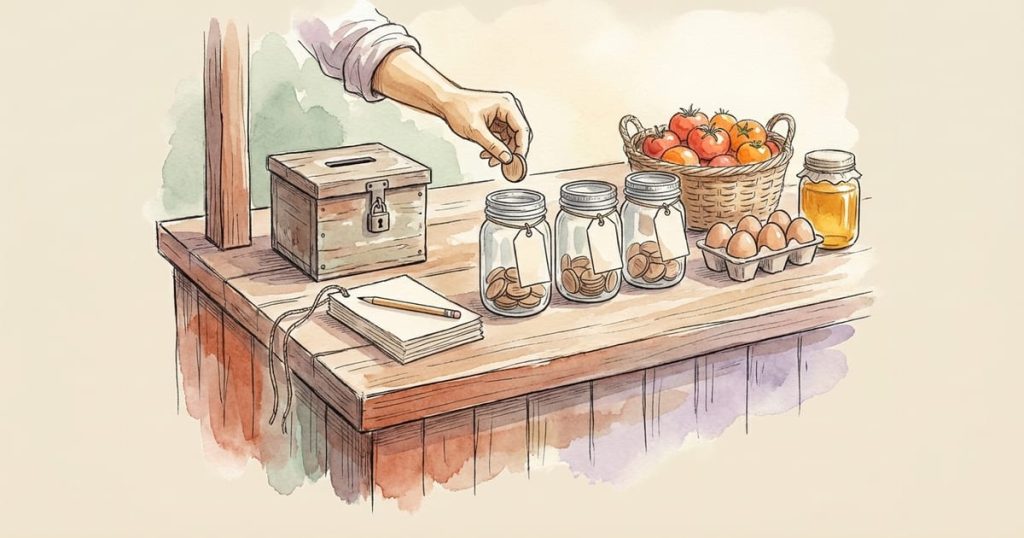
At a staffed market you can just ask people how they found you. At an honor-system stand, the money appears in the box and the customer is long gone, so every sale is anonymous. You are left guessing whether the Facebook post worked, whether the new roadside sign is pulling anyone in, or whether people are driving out specifically for your sourdough.
You do not need an app or an email list to fix this. You need to give visitors a way to tell you, in about ten seconds, while they are already standing at your cash box.
The trick is to ask at the moment of payment, keep it to three or four questions, and make answering feel like part of the stand rather than a survey. A little card in the cash box will do it. So will a row of jars and a handful of wooden tokens.
To make the easy version genuinely easy, we made you a free pack: five printable farm stand feedback notepads plus a coloring page for the kids. Grab it at the bottom of this page.
Why anonymous sales are a real problem
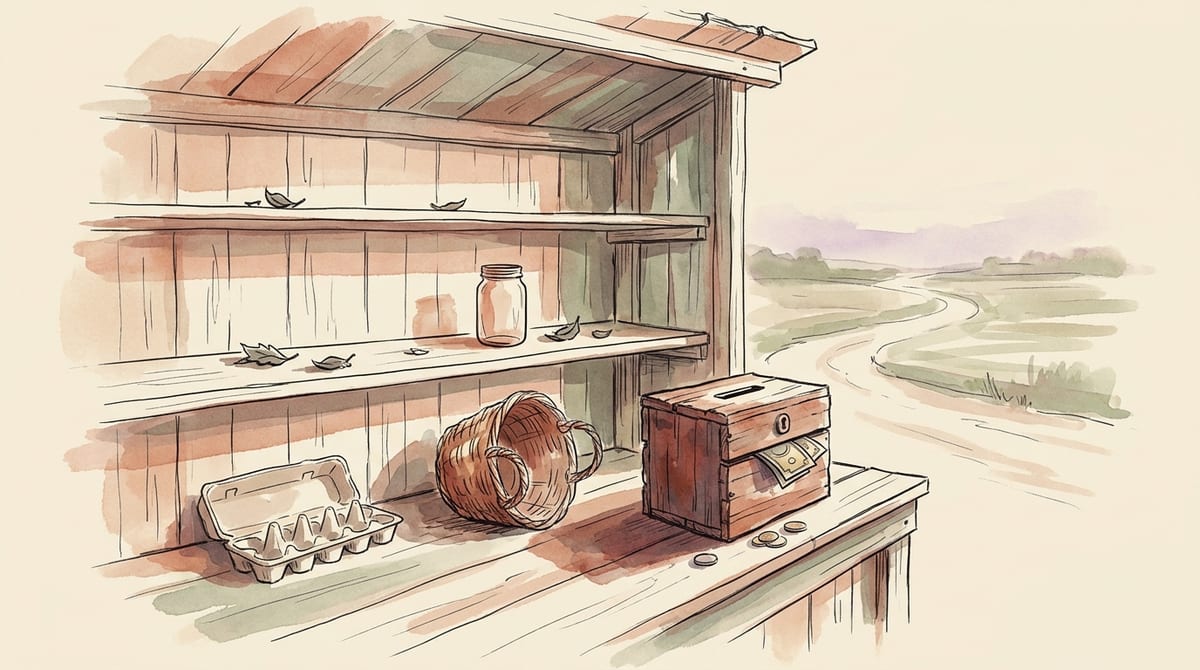
You already know your outputs. You know that eleven dozen eggs, six loaves, and most of the zucchini left the stand. You know what was in the cash box and what came through Venmo.
What you do not know is the why behind any of it.
Did those customers see your roadside sign, or did a neighbor send them? Did the woman who bought three bouquets find you on Instagram last week, or has she been driving past for a year? When you posted about fresh sourdough on Tuesday and had a good Wednesday, was that the post, or was it just nice weather?
This matters for two decisions you make constantly.
The first is where to spend your time. Social media, a better sign, a listing in a local directory, and a hand-lettered sandwich board all cost you something. If you never learn which one brings people down the driveway, you are dividing your attention by guesswork.
The second is what to make. Plenty of people show up for eggs and leave with eggs, jam, and a bunch of dahlias. If you only look at what sold, jam and dahlias look like winners. If you look at what brought them, eggs might be the entire reason your stand has traffic at all. Those are very different businesses, and they call for very different Saturday mornings.
The good news: none of the methods below require a customer's name, email, or phone number. You are not trying to identify anyone. You are trying to learn about the visit.
1. Put a feedback notepad by the cash box
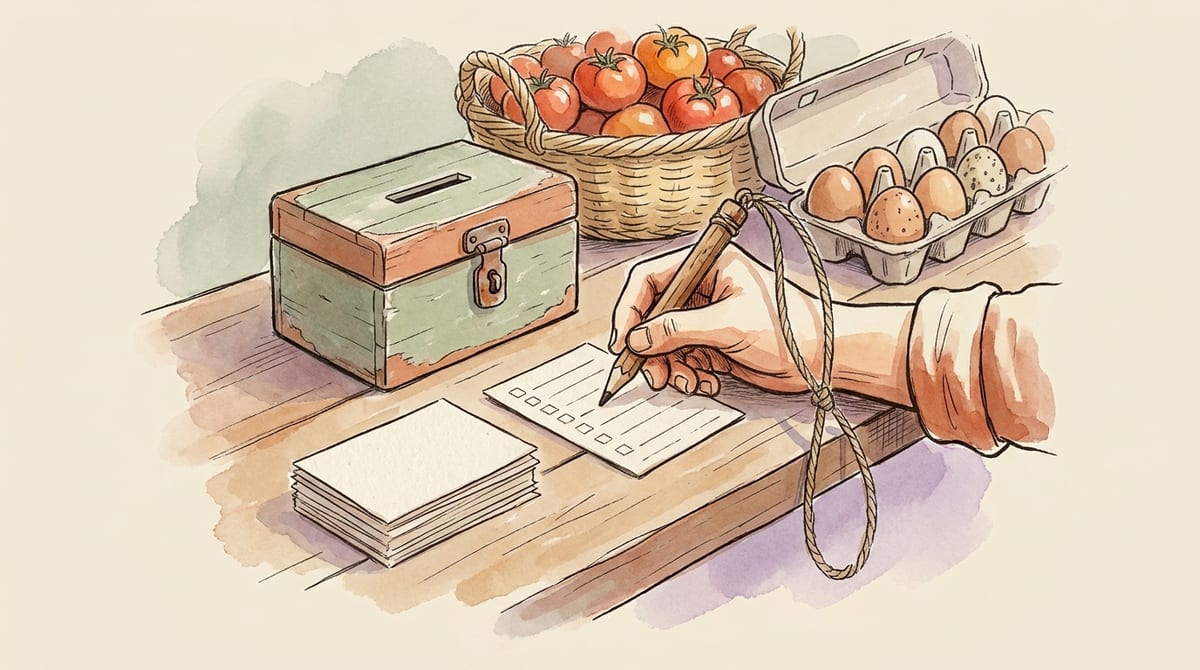
This is the highest-value method, and it is the one to start with, because it is the only one that connects all three facts about a single visit: how the person found you, what pulled them in, and what they actually spent.
A small card beside the cash box, roughly the size of a postcard, asks a few quick questions:
How did you find us? With checkboxes for the roadside sign, Facebook, Instagram, Google, a friend or neighbor, a local community group, returning customer, and other.
What brought you here today? With checkboxes for eggs, produce, flowers, baked goods, honey or preserves, seasonal items, just browsing, and other.
What did you buy, and what was your total? Two short blank lines.
The customer fills it out and drops it in the honor box along with their cash. If most of your sales come through a payment app, set out a second small container, a mason jar or a little wooden box, just for the cards.
A few things make the difference between a notepad that gets used and one that gets ignored:
- Boxes beat blanks. Checking a box takes a second and requires no thinking. A blank line asking someone to compose a sentence is real work, and most people will skip it. Use checkboxes for the questions you most want answered, and save the blank lines for the one or two things that genuinely need words.
- Keep it short. Every extra question costs you responses. SurveyMonkey looked at 100,000 surveys and found that drop-off climbs fastest with each question you add up to about fifteen. Your card is not a survey with fifteen questions, and it should never become one. Three or four is the sweet spot.
- Do not call it a survey. "Help our little farm stand grow" gets filled out. "Customer survey" gets left on the table.
- Make it look like it belongs. This is the part people skip, and it matters more than it should. A card that looks like a market ticket, a seed packet label, or a county fair admission stub reads as part of the experience. A photocopied form reads as homework. A flower stand can run a botanical card with watercolor blooms, an egg stand can put a chicken on it, and a bakery stand can go vintage grain sack. You can even swap the design seasonally: pumpkins in fall, seed packets in spring, berry baskets in summer.
- Leave a pen that works. Tie it to the stand. This sounds like a joke and it is the single most common reason feedback cards come back blank.
The free printable pack at the bottom of this post is exactly this card, in five designs, ready to print and cut.
2. Set up a token voting station
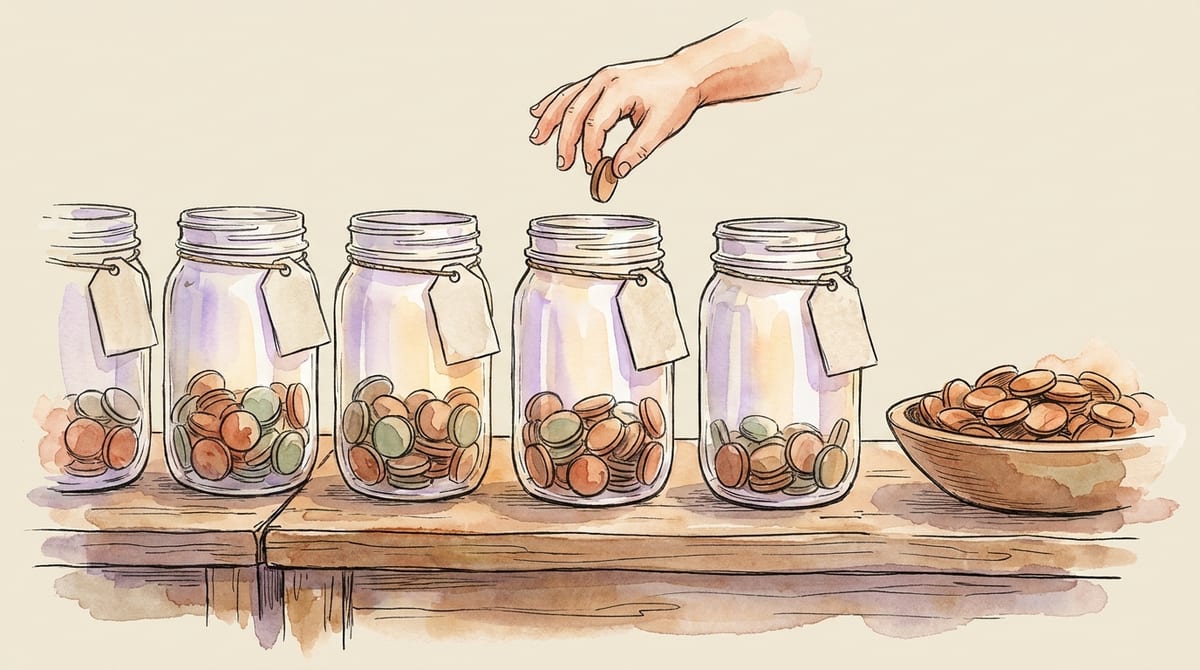
If you want the highest participation rate you can get, ask people to drop a token in a jar. It takes one second, it requires no pen, no writing, and no reading of fine print, and children love doing it, which means parents stop.
Set out a row of labeled jars, small galvanized buckets, wooden produce boxes, or painted flowerpots, and a dish of wooden tokens, buttons, pebbles, or clothespins. Two stations work well.
The first asks how did you find us? with a container each for:
- Roadside sign
- Facebook or Instagram
- Friend or neighbor
- Returning customer
The second asks what brought you here today? with a container each for:
- Eggs
- Bread or baked goods
- Produce
- Flowers
- Honey or jam
- Seasonal items
- Just browsing
Visitors drop one token in each on their way out. At the end of the day or the week, count them and write down the totals.
The trade-off is real and worth understanding: a token station gives you volume but not connection. You will learn that eleven people came from Facebook and that nine came for eggs, but never that the same person did both, and never what any of them spent. That is the price of making it effortless.
It earns its place anyway, because it doubles as display. A row of mason jars filling up with wooden tokens is genuinely charming, and it makes your stand feel alive even when nobody is standing in it.
3. Hang a "what brought you down the driveway?" board
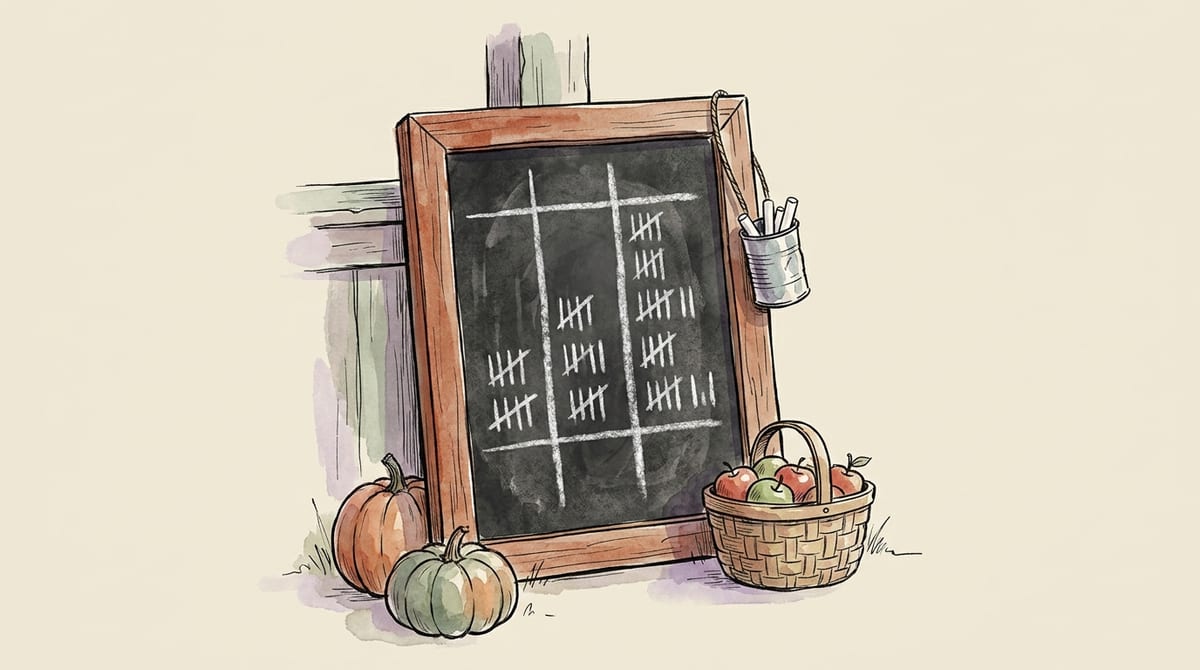
A chalkboard, magnetic board, or pegboard with one big friendly question turns your research into decor.
What brought you down the driveway today?
Visitors add a tally mark, move a clothespin, stick on a magnet, or drop a token beside their answer. Fresh eggs. Homemade bread. Seasonal produce. Flowers. Honey or jam. Something I saw online. I was passing by. A friend told me. Curiosity got the best of me.
A second board can ask how they first discovered the stand at all.
The board's real advantage is that it is public, and that cuts two ways in your favor. Seeing that other people have already answered makes new visitors far more likely to join in. And the tally itself is social proof: a customer who sees fourteen marks beside "fresh sourdough" may well decide to buy a loaf they had not planned on.
You will not get purchase totals or per-customer detail out of a board. What you will get, fast, is the shape of your traffic. It might tell you that almost everyone finds you by driving past, while the thing that makes them come back on purpose is a product you have only ever mentioned online.
Start Traders Till for free.
Cost your products, print compliant labels, and track every sale. Free forever plan, no card required.
4. Add a QR code survey for the phone crowd
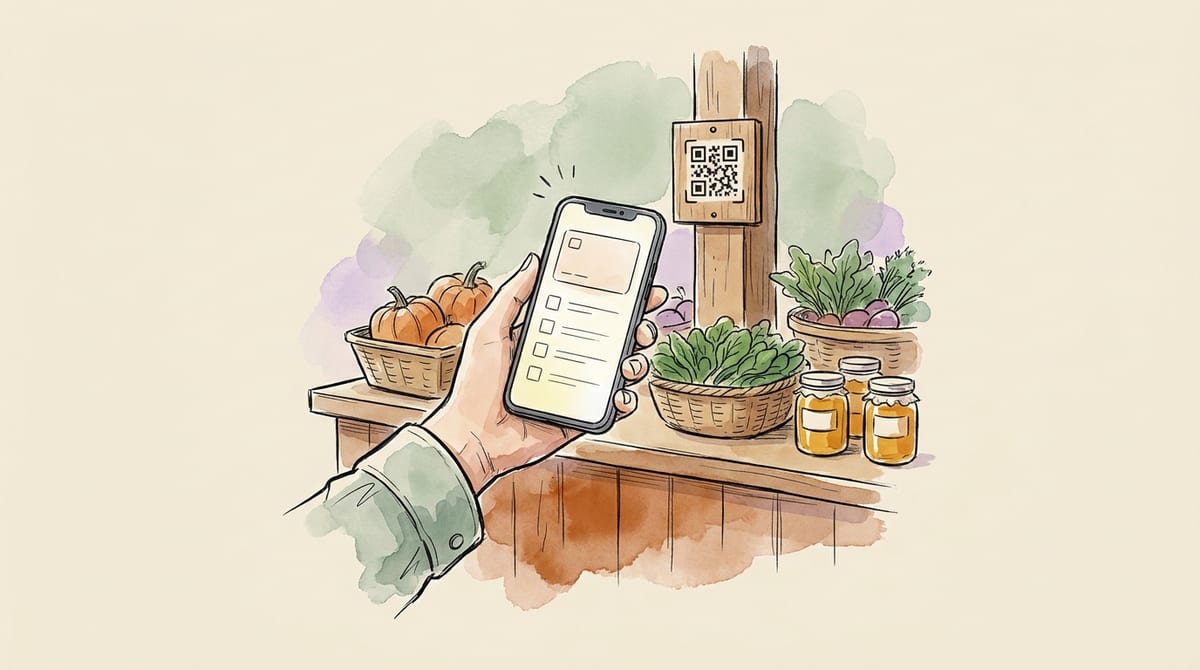
If your stand already has a QR code for Venmo, Square, or PayPal, your customers are standing there with their phones out and unlocked. One more small code costs you nothing.
Keep the sign honest about the ask:
Help us decide what to stock next week. Two taps, no name or email.
Then keep the survey brutally short. How did you hear about us, what did you come for, roughly what did you spend, and what would you like to see here next time. That is it. Four questions, all taps, no typing.
Two rules make or break this one. Never require a login or an email address. The moment the form asks a customer to identify themselves for the privilege of doing you a favor, you have lost most of them. And tell them what their answer buys them. "This decides what we bake next week" is a genuinely motivating reason to tap four buttons. "Your feedback is important to us" is not.
This method skews. The people who scan QR codes are not a random sample of your customers, they are your younger, phone-comfortable, already-engaged customers. That is useful to know, and it is a reason to run this alongside a paper card rather than instead of one.
5. Run the mention test
The four methods above all ask the customer to report. This one does not, which is why it is worth keeping in your back pocket: you let the channel identify itself.
Put something specific and a little odd in one channel only. A Facebook post that says "mention the pumpkin at the stand this week and take a dollar off." A line in your Instagram caption that says the flowers behind the cash box are free to whoever asks. A code word on your roadside sign but nowhere else.
Then count how many people say the word.
Nobody has to fill anything out, and nobody has to remember where they saw you, which, as you are about to see, is the weakest link in every other method on this list. If eleven people ask about the pumpkin, you know with certainty that at least eleven customers saw that post and acted on it. It is the closest thing a farm stand has to a tracking link.
Change it up every week or two, run it in one channel at a time, and you will build a real picture of which channel actually moves people.
How to read what you get
Here is where most advice on this stops, and it should not, because self-reported answers have some well-documented blind spots. Knowing them is the difference between using your data and being misled by it.
Rand Fishkin of SparkToro, who has spent years on exactly this question in marketing, lays out three problems with asking people how they heard about you. All three apply squarely to a farm stand.
Memory is unreliable. People genuinely do not remember. Someone who saw your Facebook post in April, drove past the sign three times in May, and finally stopped in June because their neighbor mentioned you will check exactly one box, and it will probably be the one they can recall most easily. They are not lying. Human memory is just not a log file.
The question is ambiguous. "How did you find us?" could mean how you first heard the stand existed, or what made you actually pull over today. Those are different answers, and your customer is silently picking one without telling you which.
You only hear from the people who came. This is the big one, and it is easy to miss. Your card can only be filled out by someone standing at your stand. The people who never found you, who are the entire audience your marketing is supposed to reach, cannot tell you what they pay attention to. Your feedback tells you about the channels that are already working. It is nearly silent on the ones that could work.
None of this makes the exercise pointless. Fishkin does not say to stop asking, and neither do I. It means you treat what you get as directional, not gospel. A clear trend across fifty cards is worth acting on. A three-to-two split is noise. And "our roadside sign wins every week" might genuinely mean your sign is great, or it might mean the sign is the last thing everybody sees on the way in and therefore the easiest thing to remember.
Which is exactly why the mention test in method five is such a good companion. It does not depend on anybody's memory at all.
Know your real numbers
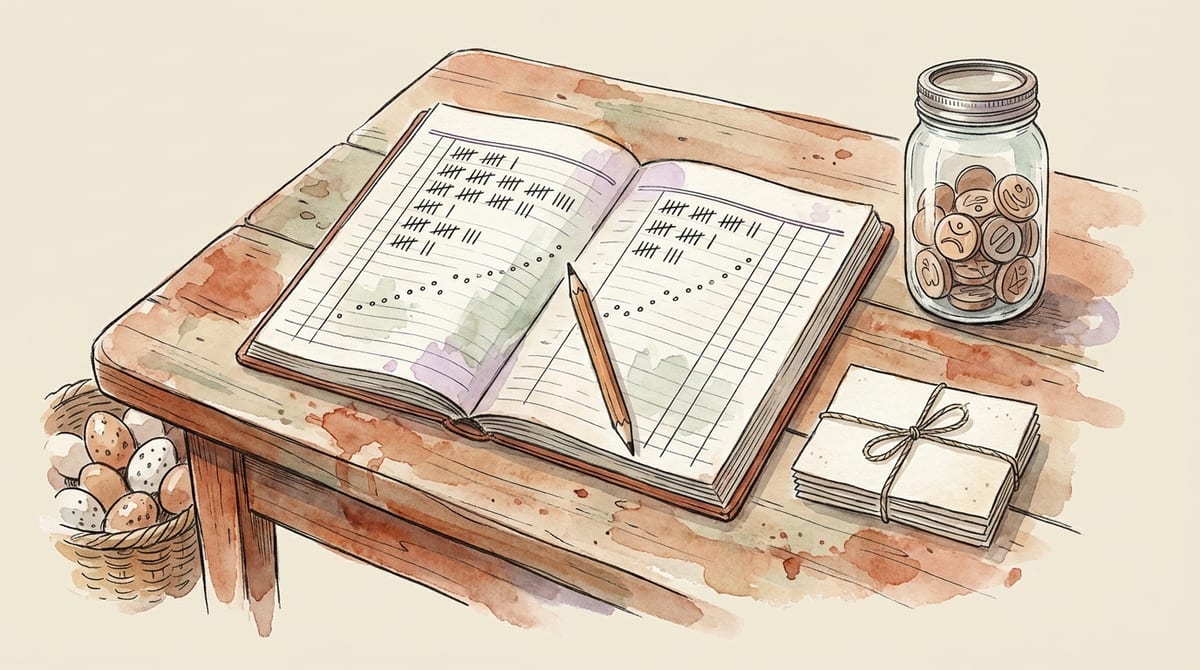
There is one more source of truth about your customers that you already own, and it is not a card in a jar. It is your own sales record.
If you log what sells and when, patterns fall out of it that no survey will give you. Post about sourdough on Tuesday and watch what happens Wednesday. Put up the new sign and compare the next two weeks to the last two. Note the day you got mentioned in the local Facebook group and look at what the box held that afternoon.
Your customers' answers tell you what they think brought them in. Your sales log shows you what actually moved. When those two agree, you can act with real confidence. When they disagree, the sales log is usually right, and the disagreement itself is worth understanding.
That is a big part of why we are building Traders Till: track every batch, sale, and cost in one place so you can see what your stand is really doing, spot the patterns yourself, and stop running your business on a hunch.
A note from April: I am building Traders Till for my own future stand, and this is the exact problem that bugs me most about the honor system. I love that it works. I love that you can leave a box of eggs on a table in the middle of nowhere and mostly get paid for them. But it means the person who drove twenty minutes because of something I posted, and the person who happened to be passing, look identical to me at the end of the day. Same money in the same box.
So I am starting with the boring version: a stack of little cards and a pen on a string. Ten seconds of somebody's time, and suddenly I know something I would otherwise have spent a whole season guessing at.
Start with one, and actually read it
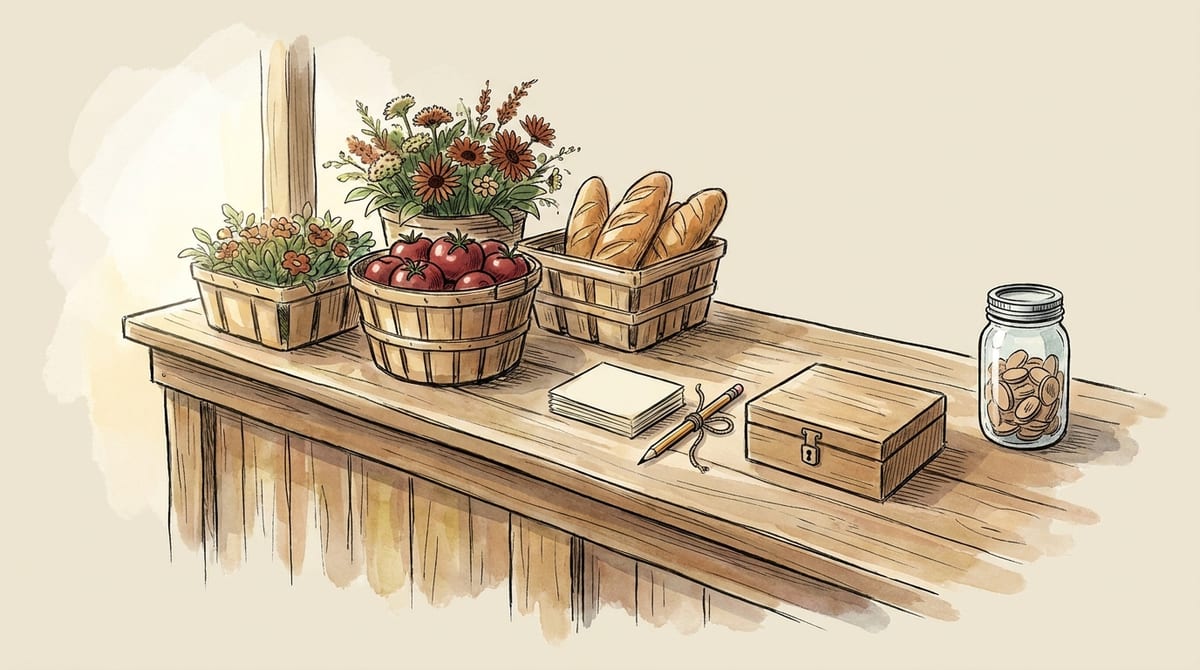
You do not need all five of these. Running all five at once is a good way to do none of them well.
Start with the feedback notepad, because it is the only one that ties the source, the reason, and the spend to a single visit. Add a token station or a board when you want participation and a little charm on the counter. Add a QR code if your customers already pay with their phones. Keep the mention test for when you want to know, without any doubt, whether a channel is real.
Then do the part almost everyone skips: actually look at what comes back. Count the cards once a week. A single sheet of paper or a five-line spreadsheet is plenty. Roadside, social, search, referral, returning. Twenty minutes on a Sunday.
Over a season, those ten-second answers add up to the things it is genuinely hard to know about a stand. Which channel brings people in. Which product is worth a special trip. What your customers wish you would stock. Which of your posts created sales instead of likes.
Your customers do not have to give up a shred of privacy for you to understand them. Most of the time, all it takes is a friendly card, a pen that works, and a jar of wooden tokens.
If you are still setting the stand up, the other half of this equation is making sure the money that should be in the box is actually in it. We wrote a whole guide on farm stand theft and the signs that prevent it, and it comes with its own free printable pack.
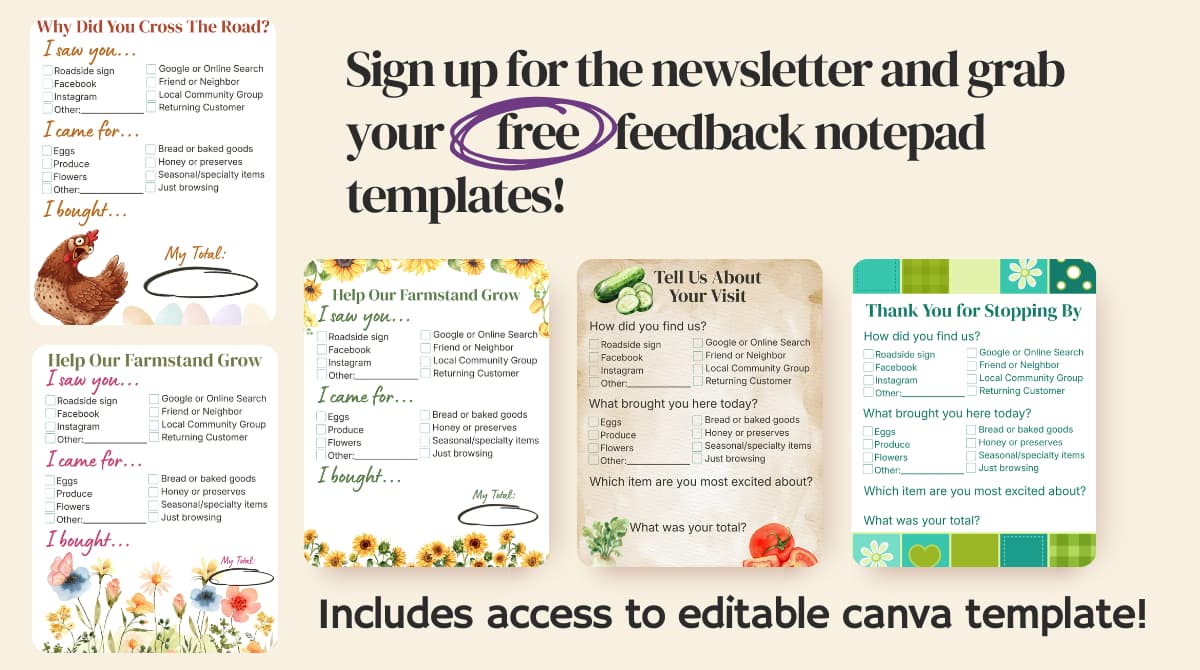
You’re in! Check your inbox to confirm your subscription, and your free farm stand notepad pack is on its way.
Five designs plus a coloring page and an editable Canva template. We email you the pack. No spam, unsubscribe anytime. Entering your email also subscribes you to the Traders Till newsletter.
Sources
Every source below was checked against the issuing agency's own page on July 16, 2026.
-
Fishkin, R. (2023, September 20). The 3 Big Problems with Asking "How Did You Hear About Us?" SparkToro. sparktoro.com
-
SurveyMonkey. Does Adding One More Question Impact Survey Completion Rate? (Analysis of 100,000 surveys, 2,000 at each question count from 1 to 50.) surveymonkey.com
Summarize & Save This Guide On
Add Traders Till As A Preferred Source on Google Prompt copiedApril Lee has a B.S. in Agriculture from Cal Poly Pomona, is a certified food handler (ANAB-accredited, Learn2Serve), and holds ANAB-accredited food allergy training. She writes about selling homemade and homegrown products - cottage food rules, pricing, and the business side of farm stands - and is the co-founder of Traders Till, an app that helps home producers track what they make, sell, and earn.
Start Traders Till for free.
Cost your products, print compliant labels, and track every sale. Free forever plan, no card required.
 Save to Pinterest