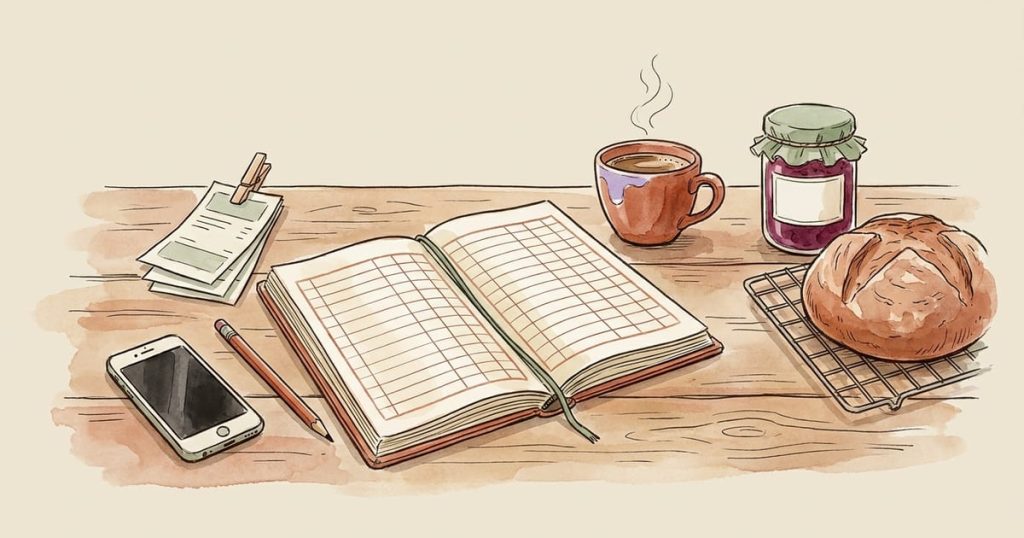
Bookkeeping for a small food business is just two habits: record every sale and every expense, and do it weekly instead of once a year. Keep your receipts, track a handful of categories (income plus ingredients, packaging, supplies, market fees, mileage, and equipment), and keep business money separate from personal. That is enough to know if you are profitable, survive tax time, and file a clean Schedule C.
You do not need to be an accountant. You need a routine.
This is general information, not tax, legal, or accounting advice. Rules and thresholds vary by state and change over time, and every business is different. For decisions about your taxes, talk to a qualified tax professional.
Why bother with bookkeeping at all?
When you are baking a few dozen loaves or filling a market table on Saturdays, "the books" can feel like overkill. It is not. Bookkeeping does four things no amount of hustle can replace.
First, it tells you whether you are actually making money. Plenty of food sellers are busy and still losing money on certain products, and without records you simply cannot see it.
Second, it makes tax time survivable. The IRS notes that good records help you "prepare your tax returns" and "support items reported on your tax returns" (IRS).
Third, it helps you spot problems early, like a jar cost that crept up or a market that never pays for itself.
Fourth, if you sell as a business, you almost certainly report it on a Schedule C, and that form is built directly from your income and expense records. See Schedule C for home food producers for how the two connect.
The IRS is blunt about whose job this is: "the responsibility to substantiate entries, deductions, and statements made on your tax returns is known as the burden of proof" (IRS). Translation: if you deduct it, you have to be able to prove it. Records are the proof.
What is the core habit?
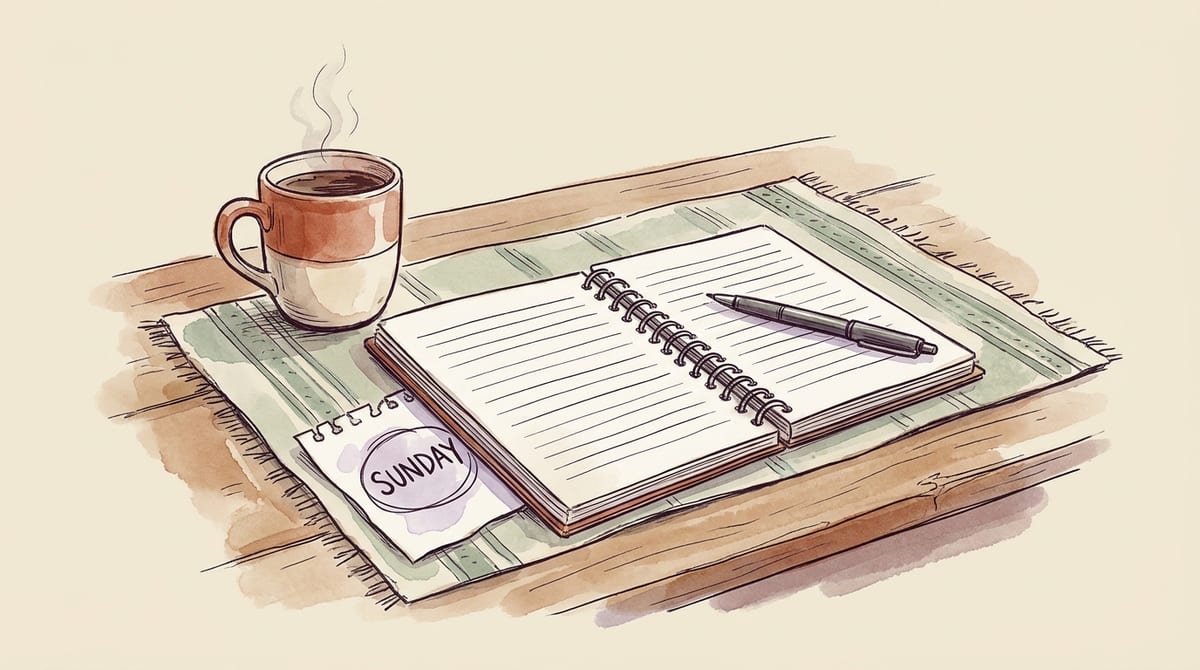
If you remember nothing else, remember this: record every sale and every expense, keep the receipt, and do it weekly.
The "weekly" part is what separates people who have books from people who have a shoebox. A year of receipts reconstructed the night before taxes is stressful, error-prone, and almost guaranteed to miss deductions you earned.
Fifteen minutes on a Sunday, while the market is fresh in your mind, is easy. You remember that the $12 was for jars and the $30 was the booth fee. Six months later you will not.
Pick a rhythm you will keep. After every market or every batch is even better than weekly. The best system is the one you will actually do.
If you have a farmstand or a porch cart, daily tracking may make more sense.
My favorite way to do this when I was first starting out is just a spiral notebook. I personally splurged for the one with the nice cover but, a dollar store composition book can work just as well. From there, I designed my own printed trackers which felt a little more "real", and eventually upgraded to software. Finally, building Traders Till to check all the boxes. Your bookkeeping method can grow as your business does. Don't feel pressured to "do it all" right now.
Which categories actually matter?
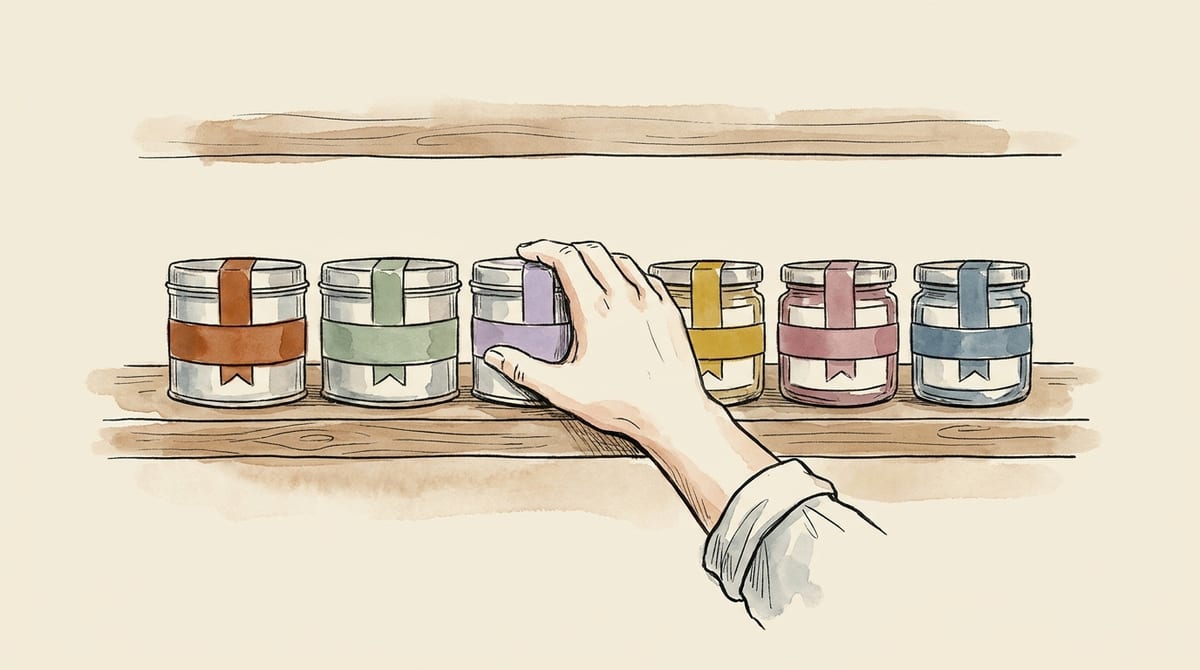
You do not need a 40-line chart of accounts. For a home food business, a short list covers almost everything.
- Income. Every sale, whatever the channel: market, pickup, online, wholesale.
- Ingredients. Flour, sugar, produce, anything that goes into the product.
- Packaging. Jars, bags, labels, boxes, ribbon.
- Supplies. Parchment, gloves, cleaning supplies, small consumables.
- Market and selling fees. Booth fees, event fees, platform or payment-processing fees.
- Mileage. Miles driven for the business (to markets, to the store for ingredients, to deliveries).
- Equipment. Mixers, sheet pans, a dedicated freezer, a label printer.
These map closely to the deductible expense lines on a Schedule C, which is exactly why tracking them as you go makes tax time easy. For the full picture of what counts, see home food business deductions.
Keep ingredients separate from packaging and supplies rather than lumping them into one "stuff" pile, because your ingredient spend is what you will later match against sales to find real profit.
Do I really need to separate business and personal money?
Yes, and it is the highest-return thing you can do for your bookkeeping. When business and personal purchases run through one account, every bank line becomes a puzzle at tax time: was that Costco run groceries or ingredients? A separate account, even a free second checking account, turns your bank statement into a rough draft of your books.
You do not need to incorporate to do this. A sole proprietor can open a dedicated account and simply run all business income and spending through it. It makes your records cleaner, your deductions easier to defend, and your profit easier to see. We walk through the how and why in separating your business and personal finances and choosing a business bank account for cottage food.
What is the simplest way to start?
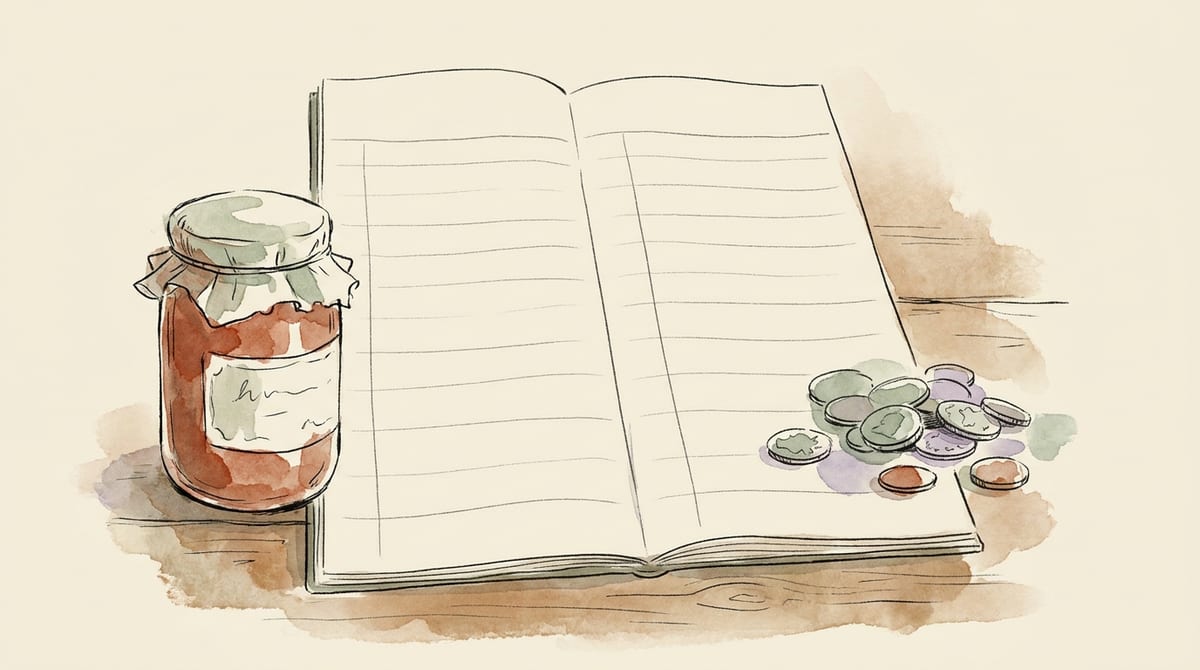
Start smaller than you think. A notebook or a spreadsheet with two tabs, income and expenses, is a completely legitimate bookkeeping system. The IRS says you may use "any recordkeeping system suited to your business that clearly shows your income and expenses" (IRS). There is no required format.
A workable starter spreadsheet has just a few columns: date, description, category, amount, and a note for which product or market it relates to. Add each sale and each expense as it happens. That is bookkeeping.
The reason people move from a spreadsheet to a tool is not the recording, it is everything around it: totals by category, tracking which product made money, tying costs to sales, and having it all ready for taxes without a weekend of sorting. When the manual version starts costing you more time than it saves, graduate to software. For low-cost and free options, see free accounting tools for makers.
Start Traders Till for free.
Cost your products, print compliant labels, and track every sale. Free forever plan, no card required.
What do I need to keep, and for how long?
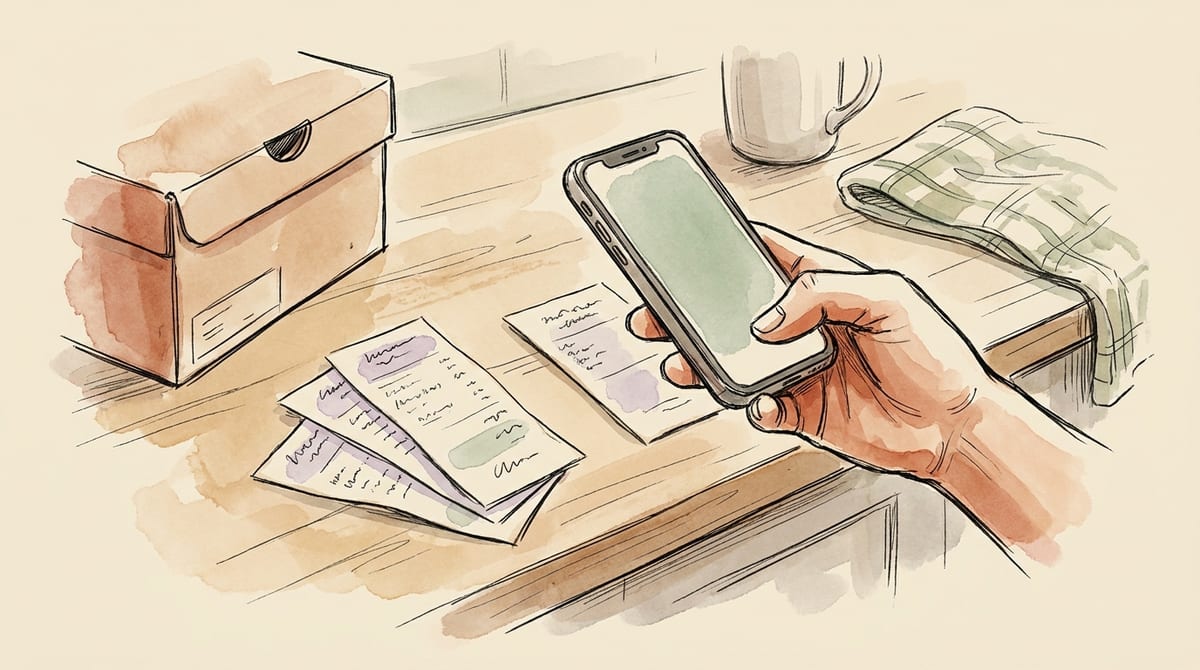
Keep the paper (or the photo of the paper) behind every number. The IRS wants supporting documents for "purchases, sales, payroll, and other transactions" (IRS). For a tiny food business that means:
- Receipts for every purchase, ingredients and equipment alike.
- Sales records showing what you sold and for how much.
- A mileage log with date, purpose, and miles for each business trip.
- Bank and payment-processor statements.
Snap a photo of paper receipts the day you get them, because thermal receipts fade to blank within months. I highly recommend storing these in storage that is backed up online. I use Dropbox but Google Drive or Apple's ICloud would work as well.
On how long to hold records, the IRS says keep them "as long as needed to prove the income or deductions on a tax return," and keep employment-tax records "at least four years" (IRS). A common, safe practical rule is to keep everything for several years. Our recordkeeping guide for home food businesses breaks down the retention rules in detail.
Don't overcomplicate this step. I am a Google user, and so I'll just take a picture and move on with my day. What's great about technology these days is Google Photos. I can just go search for a number on the receipt or just type in the word "receipt", and if I need to find it, I can track it down. Have any notes about a specific purchase? Just write it at the top. I recently sent out postcards for Farmstand Hub and a quick picture of the receipt means I'll be able to find the receipt if I need it.
How do I see my real profit?
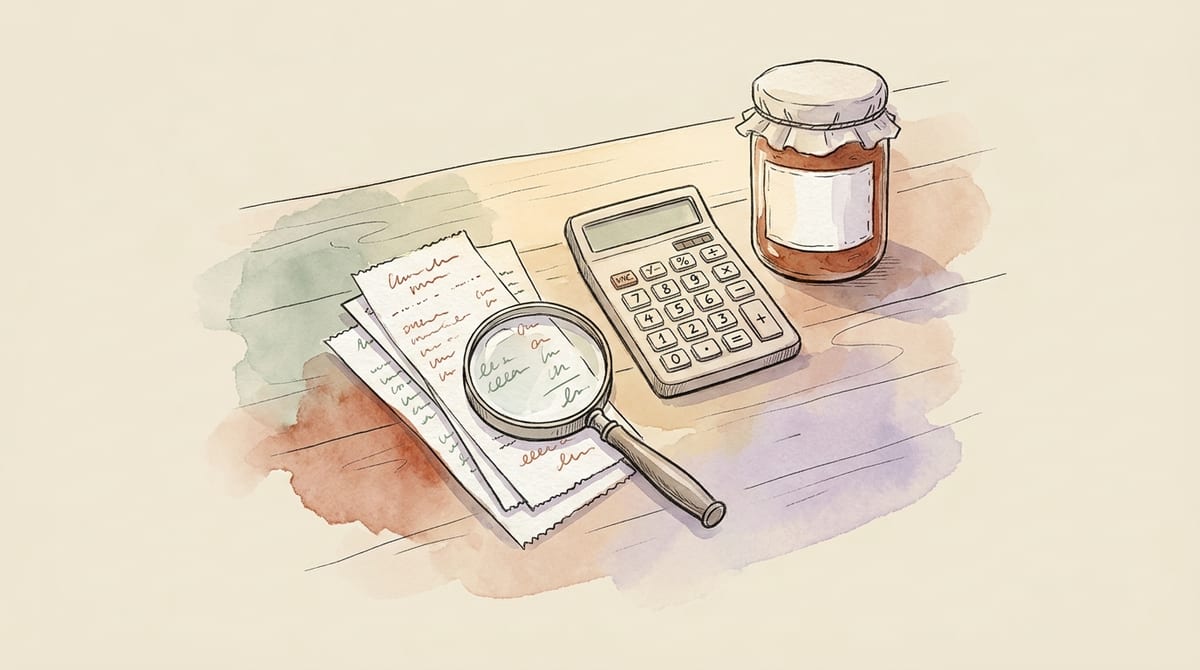
This is where bookkeeping stops being a chore and starts making you money. Recording income and expenses tells you cash in and cash out. To see real profit, you tie your sales to what those sales cost you to make, your cost of goods sold (COGS).
If a market brought in $300 but the ingredients and packaging for what you sold cost $130, your gross profit on that day is $170, before booth fees and mileage. Do that per product and patterns jump out: the item everyone buys might be your thinnest margin, and the quiet one might be carrying the table. You cannot price well without this. Learn the mechanics in how to calculate COGS for homemade food and then use it to set prices in pricing for profit margins.
What is the tax-time payoff?
Clean books turn tax season from a dreaded excavation into a copy-and-paste. When your income and expenses are already recorded and categorized, filling out a Schedule C is mostly transferring totals line by line.
Your ingredient, packaging, supply, fee, mileage, and equipment categories already line up with the form. No shoebox, no guessing, no deductions left on the table because you could not find the receipt.
The whole tax picture for a home food seller, self-employment tax, quarterly payments, sales tax, and how it fits together, lives in our home food business taxes guide. And if you are still setting the business up, start with how to start a home food business.
Where Traders Till fits
Everything above is a habit problem, and habits are easier when the tool does the recording for you. Traders Till is built for exactly this: you log a sale at the market or a batch in the kitchen, and your books update themselves.
Sales, expenses, and per-batch costs are captured as you go, categorized the way a Schedule C wants them, so "doing the books" is not a separate weekend job, it is just a byproduct of running your stand. When it comes time to price a product or file taxes, the numbers are already there.
Bottom line
Bookkeeping for a tiny food business is not accounting, it is a weekly fifteen minutes: record every sale, record every expense, keep the receipt, and keep business money separate from personal. A notebook or spreadsheet is a fine start; a tool earns its place when you want profit by product and a painless tax season. Do the small habit now and the big things, knowing your margins, filing a clean Schedule C, take care of themselves.
Want the books to keep themselves? Start free and log sales and expenses as you go, so your bookkeeping is done before tax time arrives.
Prefer to start by hand? Get our free newsletter for maker-money guides as we publish them.
Sources
Every source below was checked against the issuing agency's own page on September 13, 2026.
Summarize & Save This Guide On
Add Traders Till As A Preferred Source on Google Prompt copiedApril Lee has a B.S. in Agriculture from Cal Poly Pomona, is a certified food handler (ANAB-accredited, Learn2Serve), and holds ANAB-accredited food allergy training. She writes about selling homemade and homegrown products - cottage food rules, pricing, and the business side of farm stands - and is the co-founder of Traders Till, an app that helps home producers track what they make, sell, and earn.
Start Traders Till for free.
Cost your products, print compliant labels, and track every sale. Free forever plan, no card required.