

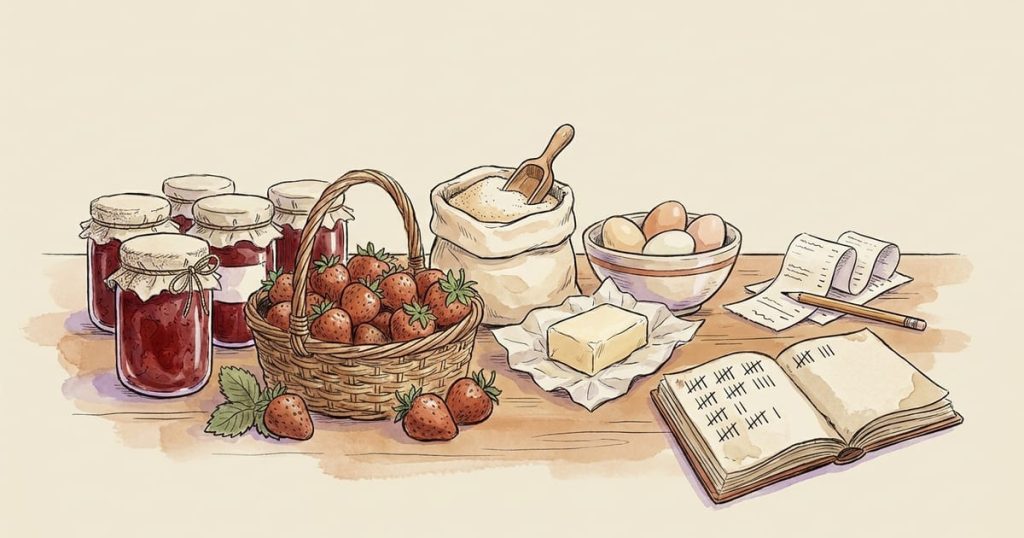
When butter, flour, sugar, or eggs spike, don't reach for the price sign first. Recalculate your real cost per unit so you know exactly how much margin the increase took. Then work the cheaper levers before you touch price: buy staples in bulk, tighten your yield, cut a product that never made money, or resize a package honestly. Raise prices only when the math says the levers are not enough, and when you do, frame it in one plain sentence. Most customers will not blink at a dollar. They will leave if the quality drops.
Note: The numbers here are worked examples, not a price list. Your real numbers come from your own recipes, your own suppliers, and your own market. The point of this page is to help you protect your margin when costs move.
Why do rising ingredient costs quietly kill your margin?
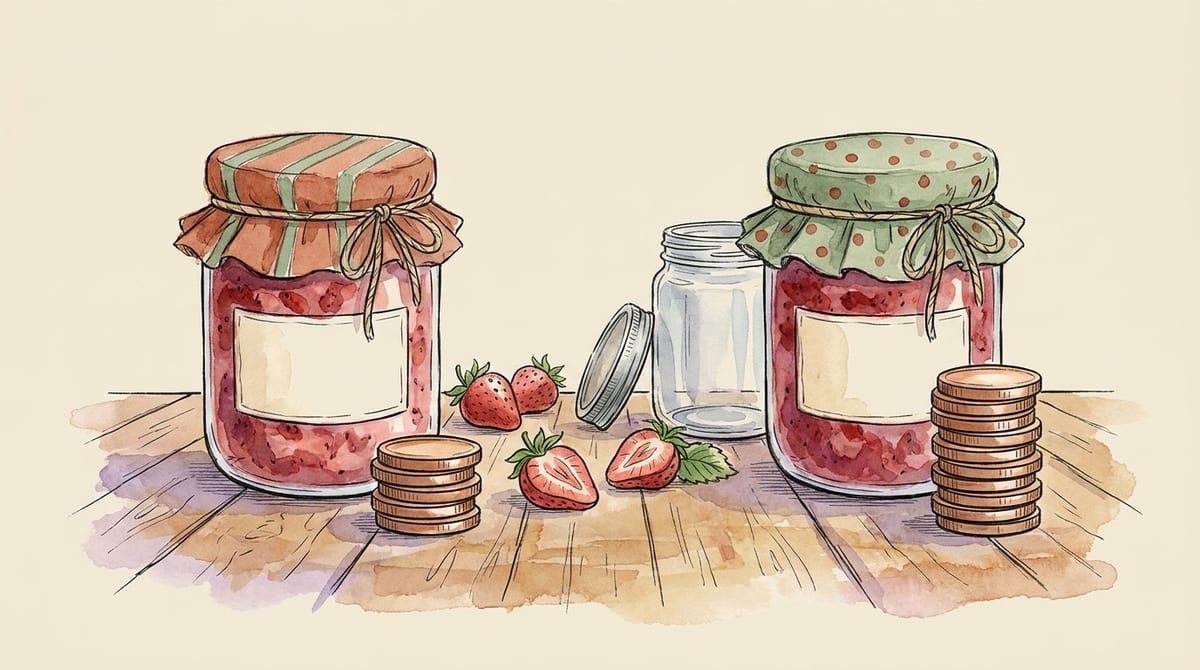
Because the damage per unit looks too small to act on, so most sellers do not act on it.
Take the strawberry jam from our pricing guide. It cost $5.88 a jar to make and sold for $10, a healthy 41 percent margin. Now say a bad berry season and higher jar prices push your costs up. Ingredients climb 20 percent and packaging climbs about 12 percent:
| Layer | Before | After |
|---|---|---|
| Ingredients | $1.00 | $1.20 |
| Packaging | $1.25 | $1.40 |
| Labor | $2.63 | $2.63 |
| Overhead | $1.00 | $1.00 |
| Cost floor | $5.88 | $6.23 |
| Margin at $10 | 41% | 38% |
Just 35 cents a jar. Easy to shrug off. But you sell about 150 jars a month, so that is $53 a month, or roughly $630 a year, walking out of your pocket while your price sign never changed. Your margin also slipped out of the healthy 40 to 60 percent band without a single customer noticing. That is the whole problem with cost creep: it never announces itself, and by the time it feels real, a whole season of wages is already gone.
Step one: recalculate your real cost before you touch your price
You cannot manage a cost you have not measured. Before you change anything, recost the batch at today's prices. Cost what you actually use, not what you paid at the register, and update every line that moved, not just the obvious one. Sugar, jars, labels, and pectin all creep at once during an inflationary stretch, and it is the sum that bites.
That recalculated floor tells you three things at a glance: how much margin you lost, whether you are still inside your target band, and how big a price increase (if any) would actually fix it. Skip this step and you are guessing, which usually means either panicking over a spike that barely touched you or ignoring one that is quietly draining you. For the full method, including yields, waste, and partial-package math, see how to calculate COGS for homemade food.
What are my options besides raising prices?
Plenty, and you should exhaust them first, because a price increase is the one lever your customer feels directly. Work these in roughly this order:
- Buy your staples in bulk or wholesale. Shelf-stable inputs (sugar, salt, jars, lids, labels, pectin) get cheaper by the case or the pallet. If jars drop from $0.95 to $0.78 each, that is $0.17 a jar back before you have changed anything the customer sees. Full breakdown: buying supplies in bulk.
- Tighten your yield and cut waste. A batch that should fill 24 jars but only fills 22 because of spillage or scorching is quietly inflating your cost per jar. Recovering even one jar per batch spreads the same ingredient cost over more units. See tracking yield and waste.
- Reformulate carefully, never cheaply. You can sometimes swap a pricey input for a comparable one, but protect the thing people buy you for. Do not thin the recipe or downgrade quality to hide a cost, and if you change an ingredient, update your label honestly, especially anything allergen related.
- Cut a product that never made money. A cost spike is a good excuse to drop the SKU that always ran a thin margin. Redirect those hours to your proven winner. Which one is that? See your most profitable products.
- Resize the package, honestly. Moving an 8 oz jar to 6 oz and pricing it accordingly is fair. Quietly shrinking the fill while keeping the old price and old label is the kind of shrinkflation customers punish. Change the stated weight clearly and price it as the smaller product it now is.
Start Traders Till for free.
Cost your products, print compliant labels, and track every sale. Free forever plan, no card required.
When is a price increase unavoidable, and how do I frame it?
When the levers are not enough to pull your margin back into the 40 to 60 percent band, raise the price. That is not a failure, it is the math working. Chasing costs with reformulations forever is how a good product slowly turns into a worse one.
When you do raise, keep it calm and boring:
- Move in whole dollars at a natural moment. New season, new label, or a new flavor lineup. $10 becomes $11, not $10.35.
- Explain it in one plain sentence. "Fruit costs went up this year" is the entire script. Do not over-apologize, and do not write a paragraph. Confidence reads as fair; hand-wringing reads as guilt.
- Give wholesale accounts 30 days notice. A short, friendly email preserves the relationship.
- Raise before you resent your own table. Customers would rather pay a dollar more than watch you burn out and disappear.
Most people quietly accept a small increase from a maker they like, especially when the quality held. The full playbook, with scripts and timing, is in how to raise prices without losing customers, and the margin targets you are aiming to protect are in pricing for profit margins.
Can I lock in prices or buy ahead on the staples?
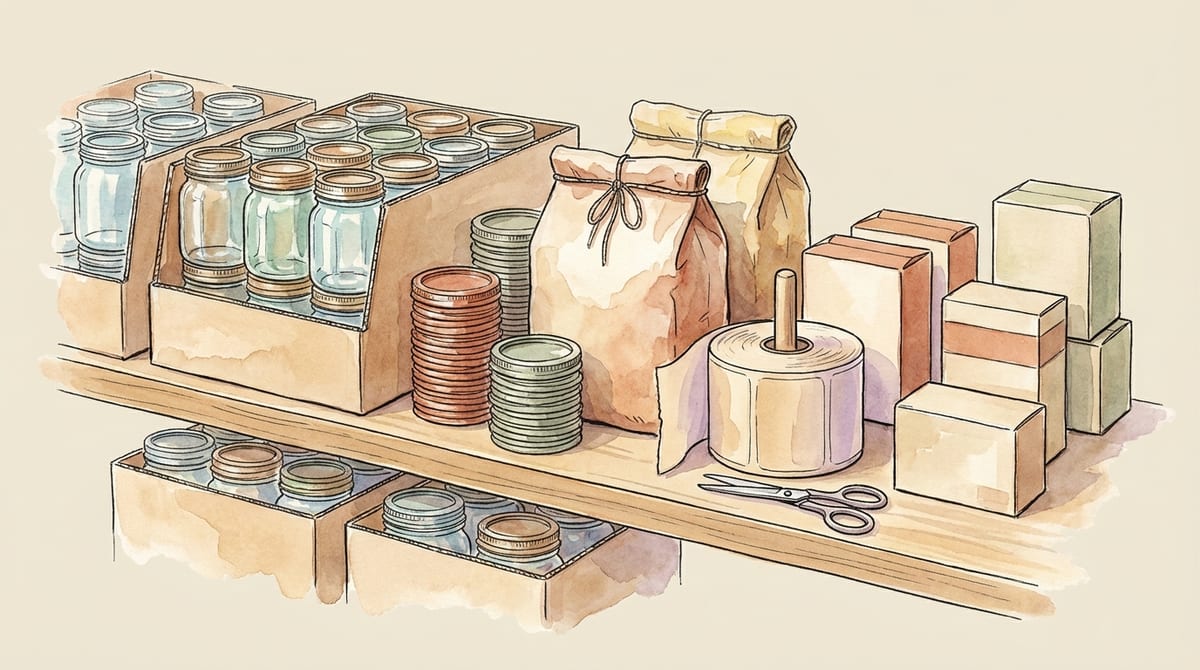
For shelf-stable inputs, yes, and it is one of the most underused moves in cottage food. When sugar, jars, labels, or pectin are cheap, buy ahead. When a supplier will hold a price on a standing order, take it. A price you locked in March is a price a July spike cannot touch.
Two cautions keep this from backfiring:
- Only stockpile what stores well. Jars, sugar, and labels keep for a long time. Fresh fruit, dairy, and eggs do not, so buy those close to when you use them.
- Do not tie up cash or space you need. Buying a year of jars is only smart if it does not strand money you need for booth fees next month.
Fresh, seasonal inputs are the ones you usually cannot lock, which is exactly why watching them closely matters.
The habit that catches cost creep early
Everything above works better if you are not finding out about a price jump at tax time. The single habit that protects your margin is a living cost sheet: you re-cost each batch as you make it, so the day jar prices jump, your per-unit cost and margin move with them and you can decide what to do that same week.
Doing this by hand in a spreadsheet works, and it is far better than nothing. The trouble is that the re-costing chore is tedious enough that most sellers skip it right up until the margin damage is already done. That is exactly why we built Traders Till: you log a batch once, and it tracks your real per-unit cost, yield, and margin every time you make it, so a 20 percent jump in butter or berries shows up in your numbers the week it happens, not in a year-end surprise. Cost creep only wins when nobody is watching the number.
Bottom line
Rising ingredient costs are survivable, and they do not have to cost you customers. Recalculate your true cost first so you know the real size of the hit. Work the quiet levers, bulk buying, tighter yield, dropping a weak product, honest resizing, before you touch the price sign. Raise prices only when the math demands it, and when you do, say it in one plain sentence and move on. The sellers who get hurt are not the ones who raised a dollar. They are the ones who never noticed the creep, or who cheapened the product to hide it.
Start free with Traders Till →
Want seasonal cost alerts, pricing tips, and new guides in your inbox? Join the newsletter →
New to the pricing math entirely? Start with the full pricing guide for homemade food, then come back here the first time a staple spikes.
Summarize & Save This Guide On
Add Traders Till As A Preferred Source on Google Prompt copiedApril Lee has a B.S. in Agriculture from Cal Poly Pomona, is a certified food handler (ANAB-accredited, Learn2Serve), and holds ANAB-accredited food allergy training. She writes about selling homemade and homegrown products - cottage food rules, pricing, and the business side of farm stands - and is the co-founder of Traders Till, an app that helps home producers track what they make, sell, and earn.
Start Traders Till for free.
Cost your products, print compliant labels, and track every sale. Free forever plan, no card required.
 Save to Pinterest