

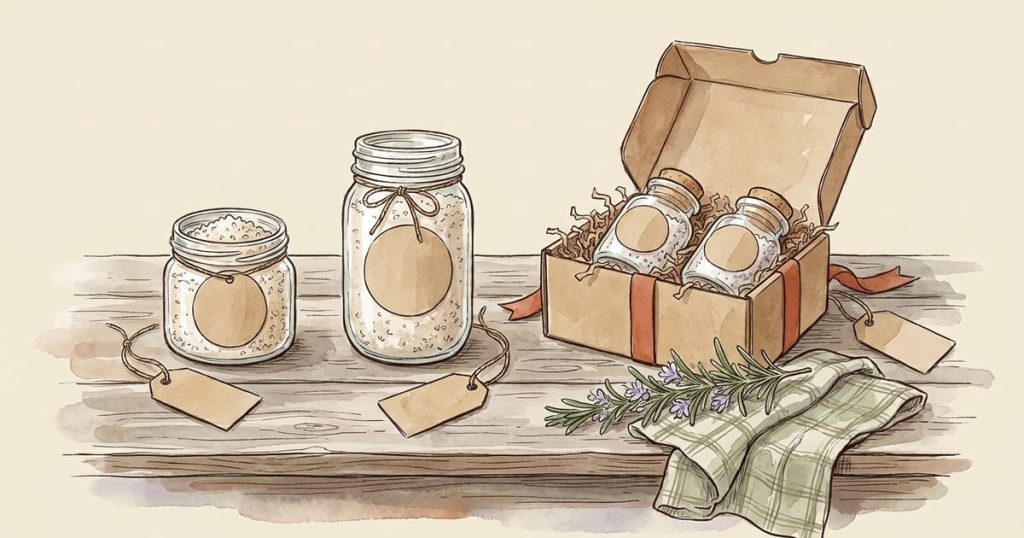
Offer three versions of your product, not one: a small good option, a standard better option, and a premium or gift best option. Most buyers avoid the cheapest (feels chintzy) and the priciest (feels indulgent) and land on the middle, so you build the middle to be the one you most want to sell. Price each tier with a healthy margin, make the jump between them feel worth it, and the premium tier quietly makes the middle look reasonable.
Done right, a three-tier lineup raises your average sale without adding a single new customer.
Note: The prices below are worked examples, not a price list. Build your own tiers from your own costs. The method is what travels; the numbers are yours to fill in.
What is good-better-best pricing?
Good-better-best is offering the same product at three levels of size, format, or quality, at three price points. You have seen it everywhere: small/medium/large coffee, the three columns on a software pricing page, the base/mid/loaded trim on a car. It works because a single price forces a yes-or-no decision, while three prices change the question from "should I buy this?" to "which one do I want?"
For a food maker, the goal is not to triple your work. It is to package what you already make into three deliberate choices that let a hesitant buyer start small and a generous buyer spend more, all at the same table. Our pricing pillar, how to price homemade food, introduces this in passing. Here is the full playbook, with the underlying math.
Why does the middle option usually win?
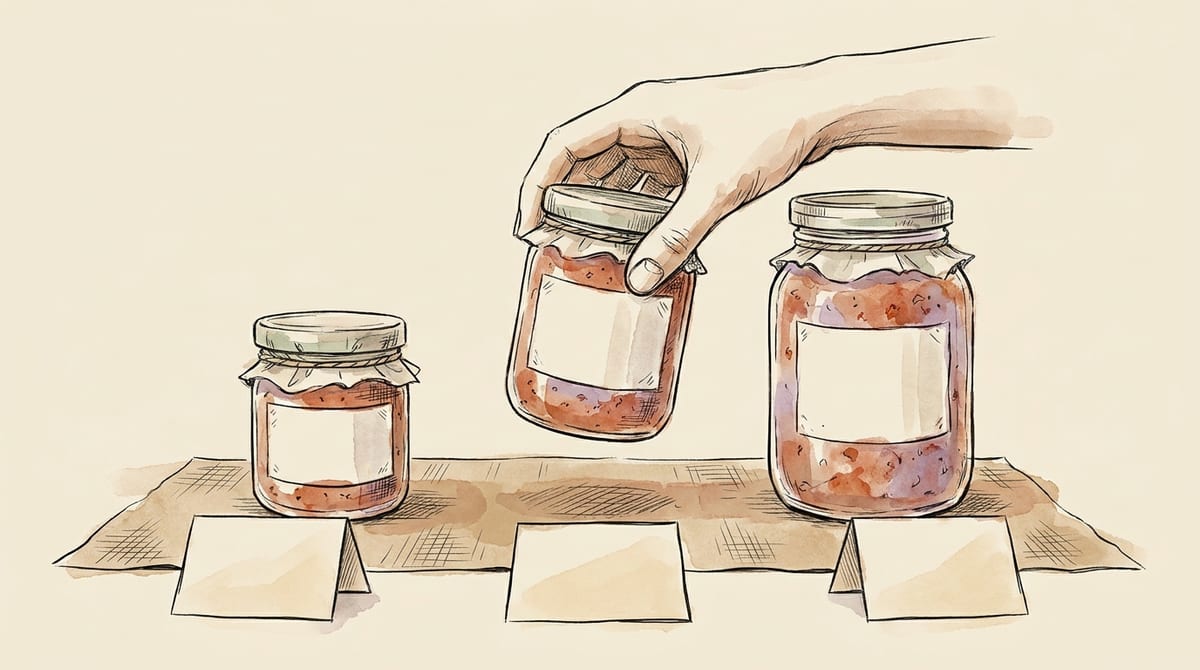
Two well-documented buyer habits do the work for you.
The first is extremeness aversion (sometimes called the compromise effect). Faced with three options, most people rule out the cheapest, assuming it is lower quality, and the most expensive, assuming it is more than they need. The middle feels like the safe, sensible pick, so that is where the crowd lands. This is why the middle tier is not your afterthought. It is your main product, and you design the other two around it.
The second is anchoring. Whatever price a shopper sees first sets the yardstick they judge the rest against. Put a $26 gift set on the table and your $12 jar suddenly reads as modest and reasonable, when on its own it might have felt like a splurge. The premium tier rarely needs to be your bestseller to earn its place. It works by making the middle look like the smart buy.
Put those together and the strategy writes itself: make the middle tier the one with the margin and the volume you want, then flank it with a small starter that removes risk and a premium anchor that makes it shine.
How do I build three tiers as a food maker?
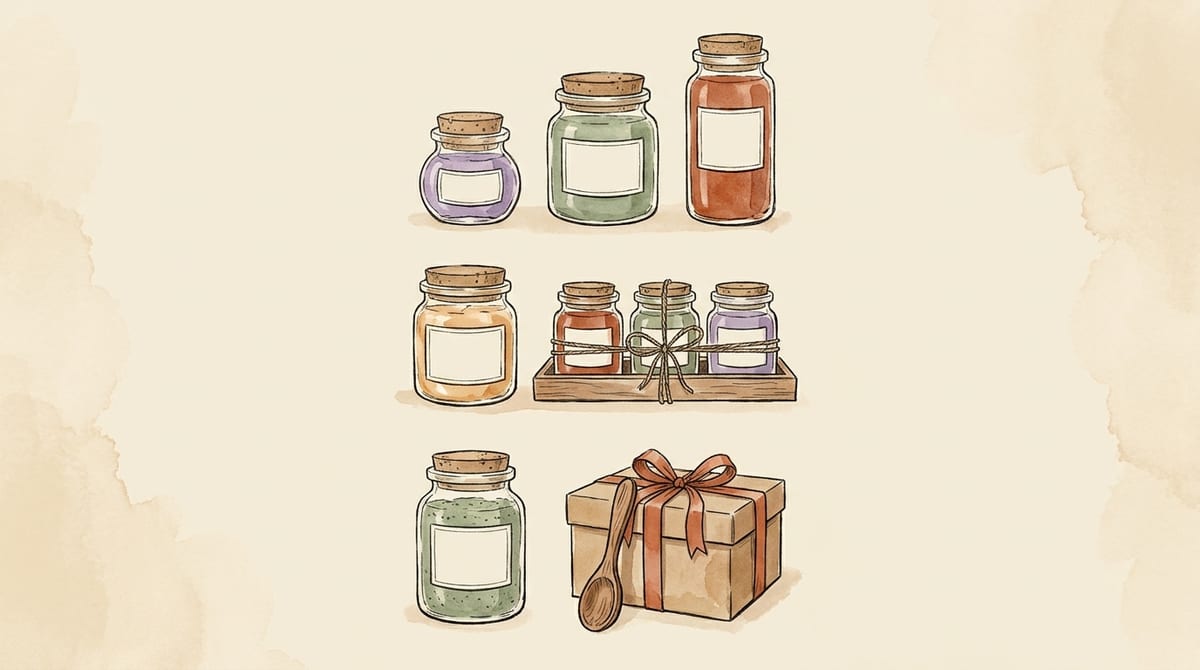
You have three easy levers. Pick the one that fits your product, or blend them.
Size tiers. The same product in three jar sizes.
- 4 oz starter jar
- 8 oz standard jar
- 16 oz value jar
Format tiers. The same product in single, multi, and gift formats.
- Single jar
- Three-flavor sampler or multipack
- Gift box with ribbon, card, and a small extra (a wooden spoon, a recipe card)
Quality tiers. A standard line and a premium-ingredient line.
- Standard flavor
- Premium version (organic fruit, single-origin, small-lot, aged, barrel-finished)
- Limited or seasonal edition at the top
Most makers get the most mileage from size and format tiers, because they cost almost nothing new to create. A gift box is your existing jars plus a $2 box. A quality tier is more work, since it needs a genuinely different (and genuinely better) ingredient story to justify the price, but it can carry the fattest margin of all three.
How should I price the three tiers?
Two rules keep a tiered lineup profitable instead of just busy.
Rule one: every tier clears its own floor. Each version has its own cost (materials, labor, overhead), so each needs its own healthy margin, ideally the 40 to 60 percent gross margin the pillar uses. A discount tier that dips below its floor loses money on every unit no matter how many you sell. Set your margins first.
Rule two: the jumps have to feel worth it. The step from good to better should give the buyer noticeably more value per dollar, which is what nudges them up. The step to best should feel like a treat, not a rip-off.
Here is a worked lineup for a small-batch finishing salt:
| Tier | What it is | Price | Cost | Margin | Per oz |
|---|---|---|---|---|---|
| Good | 4 oz jar, one flavor | $7 | $2.80 | 60% | $1.75 |
| Better | 8 oz jar, one flavor | $12 | $4.30 | 64% | $1.50 |
| Best | Gift box: two 8 oz jars + card | $26 | $10.00 | 62% | , |
Look at the per-ounce column. The 8 oz jar is the best value per ounce ($1.50 versus $1.75), so a shopper doing quick mental math feels rewarded for stepping up: double the salt for less than double the price. That is the middle tier earning its keep. Meanwhile the $26 gift box anchors the whole table high, so $12 lands as the comfortable choice. All three clear a 60 percent-plus margin, so you win no matter which one sells.
For lineups built around multipacks and mixed sets rather than sizes, our companion guide to bundle pricing for makers goes deeper.
Start Traders Till for free.
Cost your products, print compliant labels, and track every sale. Free forever plan, no card required.
What is the decoy effect, and should I use it?
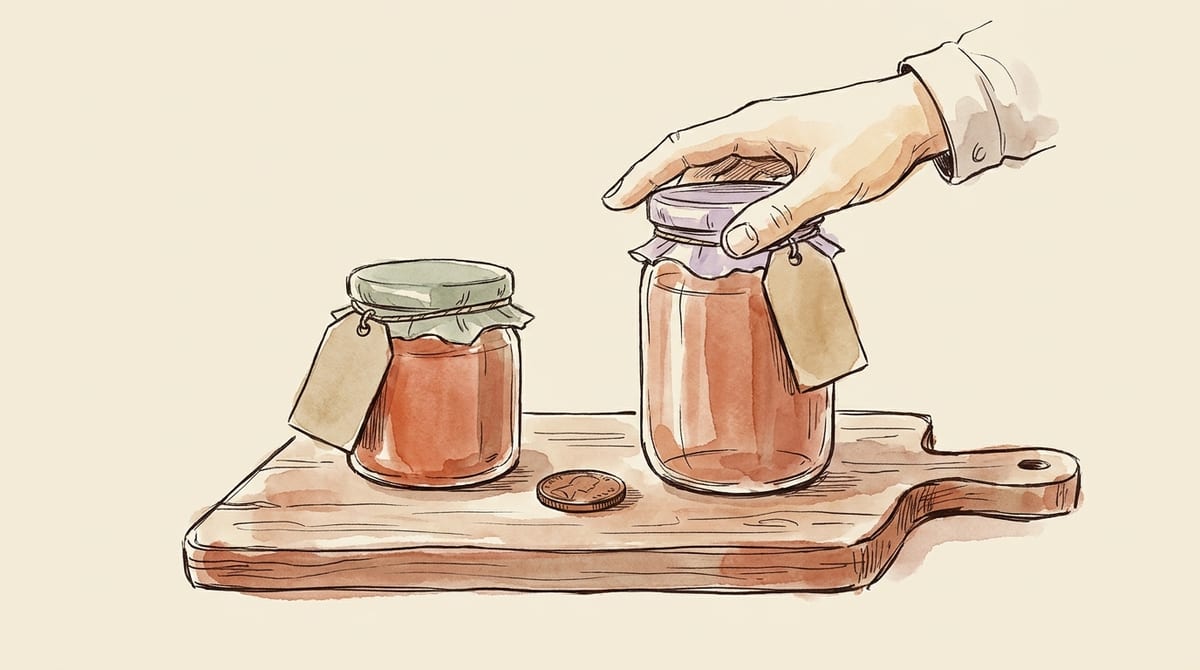
The decoy effect is a close cousin of the middle-tier trick. You add an option that is deliberately poor value, not to sell it, but to make the option next to it look obviously better.
Classic example: a 4 oz jar at $7 and an 8 oz jar at $8. Almost nobody buys the small one once they notice they can nearly double the salt for a dollar more. The 4 oz jar is the decoy; its real job is to make the 8 oz jar feel like a steal and pull sales toward it.
Used lightly, this is just honest good-better-best, and the small jar still sells to people who only want a little. The rule of thumb: a decoy should be a real product someone might genuinely want, priced so the tier you actually want to sell looks like the smart pick beside it. If the small jar exists only to trick people and never sells, drop it. More on the psychology that plays well at a stand: psychological pricing at the market.
How do I display tiers at my stand?
Good tiers priced perfectly still fail if the customer cannot see the choice in three seconds at a busy table.
- Line them up left to right, small to large, so the size-and-price ladder reads at a glance.
- Put the premium tier in view, even if you only stock a few. It anchors everything and it sells itself to gift shoppers.
- Price every tier clearly, with the middle option given the most visual weight (a bigger tag, a "most popular" or "best value" flag). A customer who has to ask usually will not.
- Say the value out loud on the sign. "4 oz $7 · 8 oz $12 (best value) · Gift box $26" does more work than a friendly explanation you have to repeat forty times a day.
- Point the gift tier at gift moments. Near the holidays, put the gift box front and center; it is also the natural on-ramp to bulk and corporate gift orders.
How do I know which tier is actually winning?
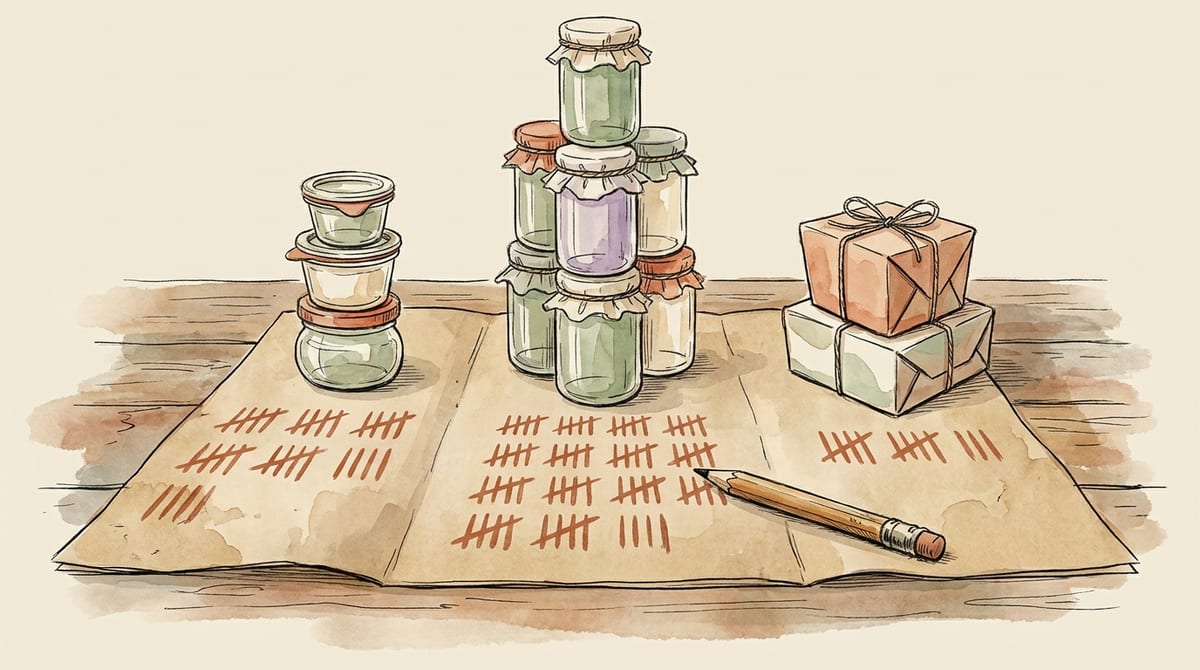
Build the three tiers, then go and check the split. The theory says the middle wins. Your own table is the only place that gets a vote.
What you want is the unit split across your own tiers over a real stretch of time. Of every jar of finishing salt you sold in October, how many were the 4 oz, how many the 8 oz, and how many went out in a gift box? Two readings matter more than the total:
- Is the middle tier really carrying the lineup? If your "better" tier is not the volume leader, it is priced or presented wrong, and the fix is usually the per-unit value story, not the price itself.
- Does the premium tier ever move? A gift box that never sells still earns its keep by anchoring. One that sells even a little is quietly lifting your average sale, and that is your cue to make more of them.
Check the split by season, not just overall. A gift tier that looks like dead weight in June is often the entire reason November works, and a yearly average buries both facts. Compare your busy quarter against a quiet one, and once you have the history, compare the same window in consecutive years.
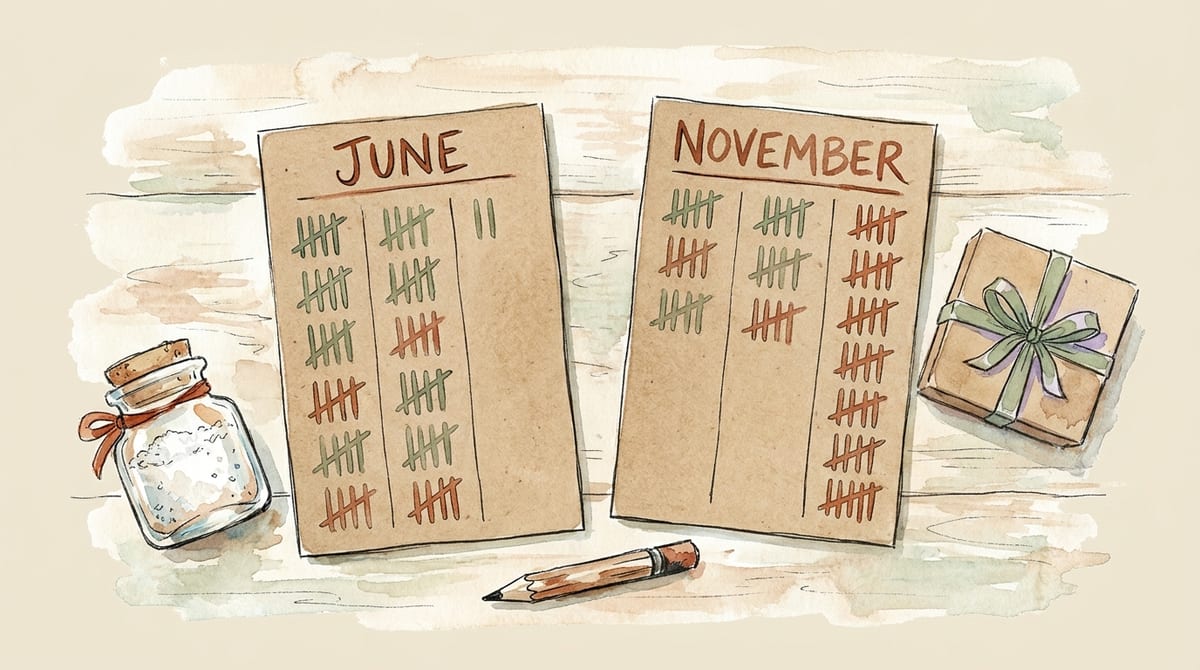
On paper this is a tally sheet and half an hour with a calculator, which is why most makers never actually do it and keep guessing at their own lineup. Traders Till reads it straight out of the sales you already recorded. The product margin report puts every version of a product on its own line with the units sold, the share of that product's sales each version took, the price you really got after discounts and refunds, and the margin both with and without your labor. Set the date range to last November and you are looking at the gift-season tier split instead of estimating it.
That is the whole loop this article asks for: price the tiers from real costs, sell them, then let the numbers tell you which one your customers actually picked.
Bottom line
One price is a yes-or-no gate. Three prices turn the sale into a choice, and buyers reliably choose the middle. Build a small good tier to remove risk, a better tier that is your real product with your target margin, and a premium best tier that anchors the table and catches gift shoppers. Give every tier a healthy margin, make each step up feel worth it, and display the ladder so the choice is obvious. You will raise your average sale without finding a single new customer.
The catch is that three tiers means three sets of costs and margins to keep honest as ingredient prices move, and a split you cannot see without counting. Traders Till tracks the true per-unit cost, yield, and margin of each tier from your real batches, and reports which tier your customers actually chose over any stretch of time you ask for, so you know both which version makes you money and which one sells.
Start Free with Traders Till →
Next, decide which of your products even deserve a three-tier lineup, which comes down to which homemade products are actually profitable. And when costs drift, tier prices move too, so plan how to raise prices without losing customers.
Want pricing tactics and seasonal cost alerts in your inbox? Join the newsletter →
Summarize & Save This Guide On
Add Traders Till As A Preferred Source on Google Prompt copiedApril Lee has a B.S. in Agriculture from Cal Poly Pomona, is a certified food handler (ANAB-accredited, Learn2Serve), and holds ANAB-accredited food allergy training. She writes about selling homemade and homegrown products - cottage food rules, pricing, and the business side of farm stands - and is the co-founder of Traders Till, an app that helps home producers track what they make, sell, and earn.
Start Traders Till for free.
Cost your products, print compliant labels, and track every sale. Free forever plan, no card required.
 Save to Pinterest